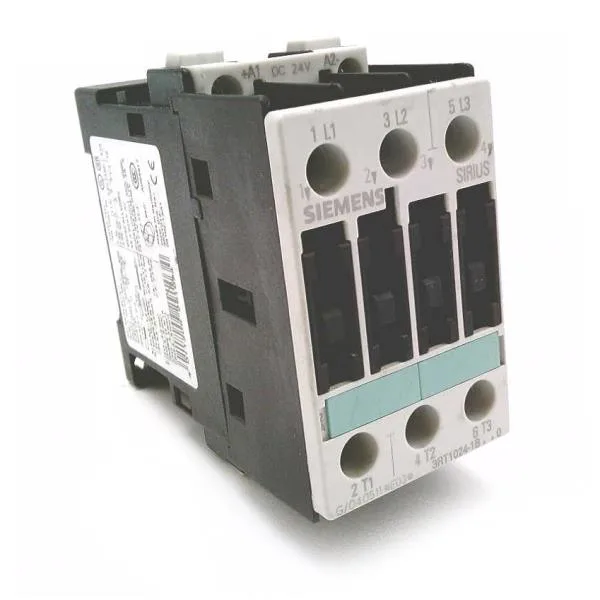
It carries a 48 VDC coil and is rated for AC-2 duty at 5.5 kW at 400 V, and AC-4 at 12.5 A at 400 V — the AC-4 figure is the one that governs reversing or plugging duty where the contactor makes and breaks the motor current under load. The DC coil draws 5.4 W on closing and 5.4 W to hold, so the holding power is the same as the inrush — no extra thermal load on the control transformer once it's sealed.
The 48 VDC coil is the main spec that decides fit — if your control voltage is 24 VDC or 110 VDC, this isn't the variant you want. The coil pull-in and dropout thresholds aren't listed here, but the holding power being equal to closing power (5.4 W) means the coil doesn't have a separate economy winding; it's a single-winding DC design. For short-circuit coordination, Type 2 coordination requires a gL/gG fuse rated 25 A, while Type 1 coordination allows up to 63 A. That's the difference between protecting the contactor itself (Type 2) versus just clearing the fault (Type 1).
Panel integration
At 45 mm wide and 85 mm tall, with a 101 mm depth, this S0 contactor fits the standard DIN-rail footprint. Screw-type terminals on the main circuit accept solid or stranded conductors: 2x (0.5 to 1.5 mm²), 2x (0.75 to 2.5 mm²), up to max 2x (0.75 to 4 mm²). For AWG, that's 2x (16 to 12), 2x (14 to 10), or 1x 8. The coil terminals are separate and follow the same wire range.