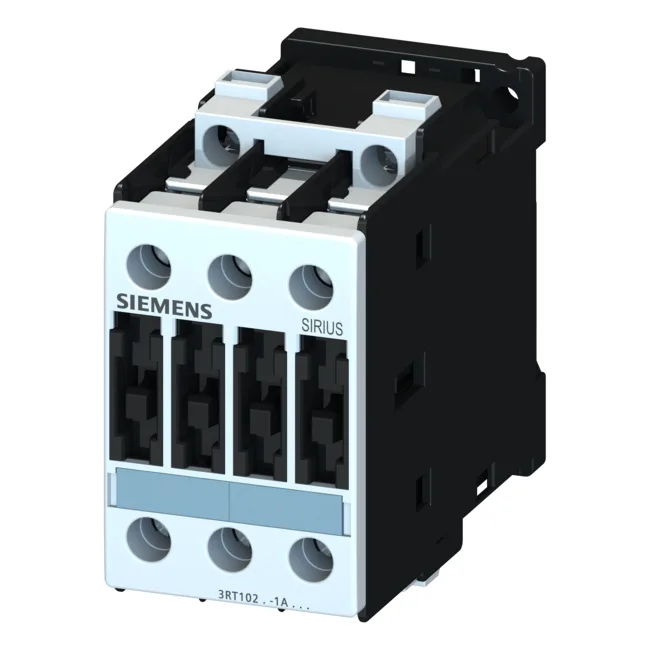
The 3RT1025-1AP08-0QA2: The AC-2 rating at 400 V is 7.5 kW — that's the duty for slip-ring motors or moderate loads. For direct-on-line starting, the AC-3 capability shows through the 500 V / 10 kW and 690 V / 11 kW ratings. The 690 V figure is worth noting: it means this S0 frame handles 690 V line supplies common in European industrial networks without stepping up to a larger frame.
Type 2 coordination (contactor remains operational after a fault) requires a 25 A gL/gG fuse. If you're designing to IEC 60947-4-1, the 25 A fuse is the one that keeps the contactor in service after a short circuit.
Side-by-side mounting is permitted with 6 mm spacing at the side — no derating needed for adjacent units if that gap is maintained.