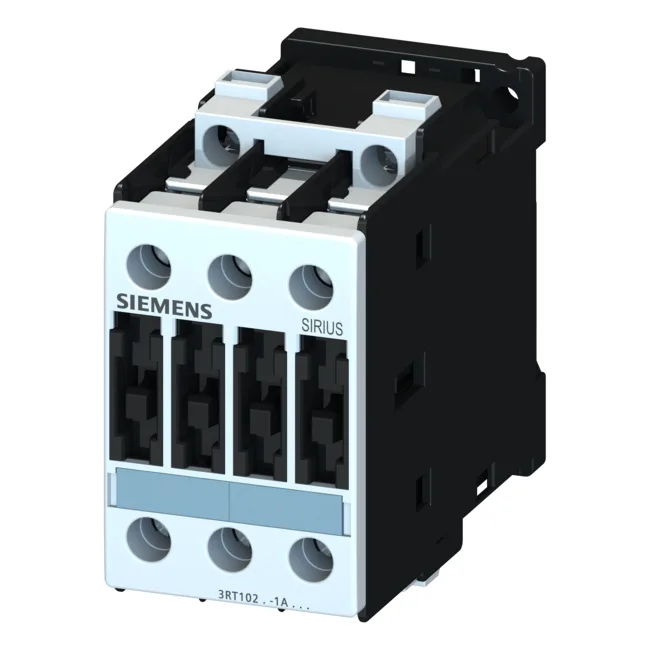
The coil is 24 V DC with a built-in varistor surge suppressor, which means you don't need to add an external suppression module across the coil terminals. That saves a wiring step and a part on the BOM.
The contactor's main contacts are rated for motor switching: at AC-3 duty (standard squirrel-cage motors) at 400 V, it handles 5.5 kW; at AC-4 (plugging/reversing) at 400 V, it handles 15.5 A. The AC-3 figure is the one you size against for normal motor starting — the AC-4 figure matters if the application does frequent inching or reversing. For resistive loads (AC-1), the contactor is rated 10 A at 230 V and 6 A at 400 V. If you're switching heaters or lighting banks, use the AC-1 column, not the motor column. The coil draws 4.2 W holding power, same as pick-up, so the DC supply needs to deliver that continuously. That's a steady-state load on the 24 V bus — factor it into your power budget.
Width is 45 mm, depth 100 mm, height 88 mm. Side-by-side mounting is allowed with no derating gap. Main circuit terminals accept screw-type connections: 2x (1 to 2.5 mm²) solid/stranded, or 2x (2.5 to 6 mm²), or max 2x 10 mm². Coil terminals accept 2x (0.25 to 2.5 mm²) solid. That covers standard panel wire sizes up to 10 mm² on the power side. IP20 on the front, IP00 at the terminals — so the terminal area is not finger-safe. The contactor needs to be inside a locked enclosure or behind a panel door.