The DC coil draws 10 A at 24 V inrush, holding at 0.7 A (the initial vs. full-scale values), so your 24 VDC power supply needs to handle that peak pull-in current. Drop-out is typically below 18 V — a standard curve for DC-operated contactors. AC motor ratings tell you what this contactor can handle: 3 hp at 230 V, 10 hp at 460/480 V, and 15 hp at 575/600 V. For IEC duty, it's rated 11 kW at 690 V. The AC-4 switching current at 400 V is 15.5 A — that's the reversing/plugging duty cycle, which is more demanding than AC-3. DC switching ratings are given at several voltages: 10 A at 24 V, 2 A at 60 V, 1 A at 110 V, and 0.3 A at 220 V. These are resistive load values — inductive DC loads will need derating or arc suppression.
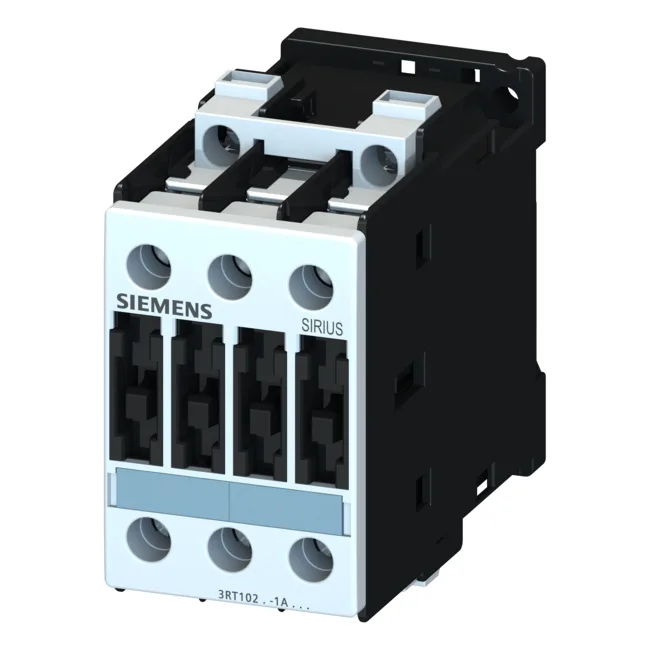
At 45 mm wide, 119 mm tall, and 100 mm deep, this S0 contactor occupies standard DIN-rail space. That's enough for airflow and wiring access in a typical enclosure. Screw terminals accept 2x (0.25–2.5 mm²) solid or stranded, and up to 2x 10 mm² for the main circuit.
The rated impulse withstand voltage of 6 kV means this contactor is suitable for installation in circuits with overvoltage category III up to 400 V — typical for industrial motor branch circuits. The maximum operating altitude of 2,000 m limits installation to most standard industrial sites without derating. Mechanical life of 10 million cycles is typical for a contactor of this class. Electrical life will be lower depending on the switching load — AC-4 duty at 15.5 A will reduce it significantly compared to AC-1 resistive switching.