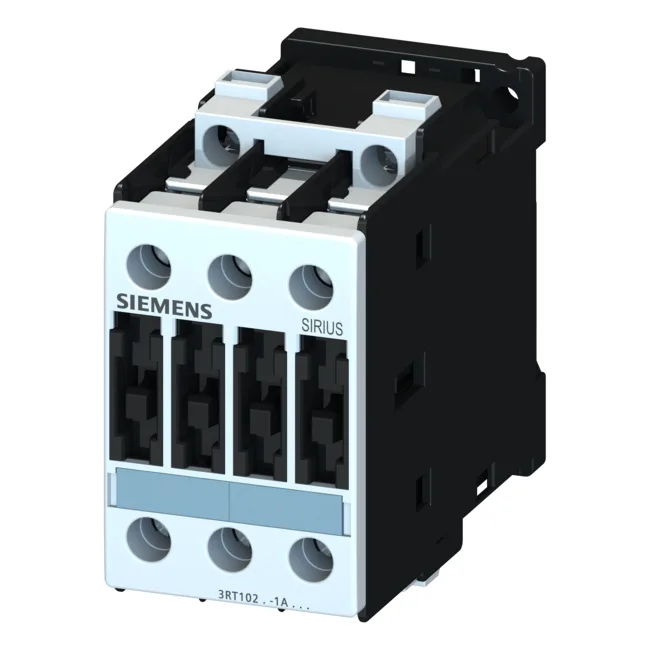
Rated for 11 kW at 400 V in AC-2 duty (slip-ring motor starting), it handles 15.5 A in AC-4 (plugging/reversing/inching). For resistive AC-12 loads, the maximum operating current is 10 A. These ratings define the real switching capability: AC-2 covers the moderate inrush of wound-rotor motors, while AC-4 covers the severe duty of frequent reversing or jogging. Wire range for the main contacts accepts up to 2x 10 mm² stranded or 1x 8 AWG, with a solid range of 2x (0.5 to 1.5 mm²) for auxiliary circuits.
Side-by-side mounting is permitted with no gap, saving rail space. If you need clearance for airflow or wiring access, the required side spacing is 6 mm. Front protection is IP20 (finger-safe), while the terminal area is IP00 — meaning the connection points are live when the panel door is open. Pollution degree 3 (conductive pollution) is assumed, so the contactor is suited for industrial environments where occasional condensation or light dust is present. The rated operating voltage factor is 0.8 to 1.1 at 50 Hz and 0.85 to 1.1 at 60 Hz — meaning the coil holds in reliably even with a 20% voltage dip at 50 Hz.
For a BOM freeze or critical-spare holding, this is a low-risk line item.