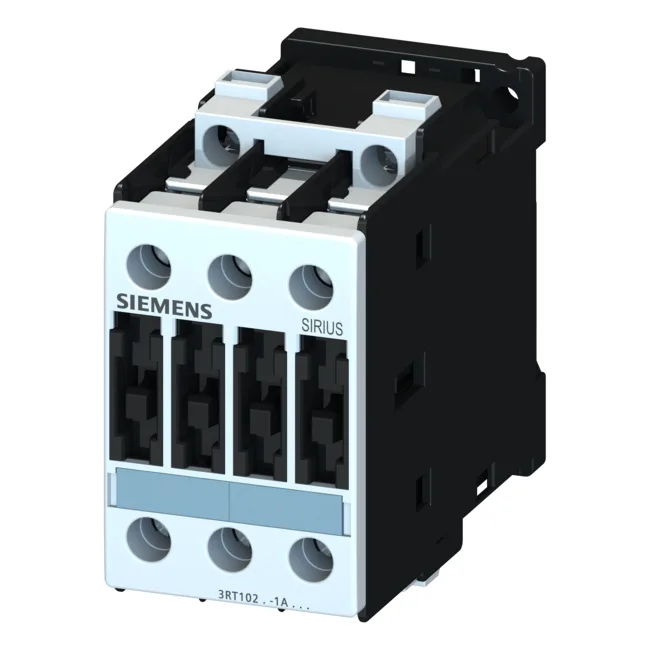
For straight across-the-line starting (AC-3), the motor power rating at 400 V is not explicitly listed here, but the AC-4 figure gives you the worst-case thermal limit for high-stress cycling. The AC-12 maximum operating current is 10 A, which covers resistive loads like heaters or lighting banks where the inrush is minimal. The difference between AC-12 and AC-4 matters: you wouldn't size this contactor for a 10 A motor load — the AC-4 derating is real.
The magnet coil is 24 VDC, with a closing power and holding power both rated at 5.4 W. That's a continuous-duty coil — it stays energized without overheating, so no need for a separate economizer circuit. The DC coil also means no hum and no inrush spike that can brown out a 24 VDC bus shared with PLC outputs.
Short-circuit coordination and wiring
Panel builders specifying a common bus should note the 35 A limit if they want to avoid replacing the contactor after a short. Main circuit terminals accept screw-type connections: solid or stranded wire from 2x (0.5 to 1.5 mm²) up to a maximum of 2x (0.75 to 4 mm²). For AWG, that's 2x (16 to 12) up to 1x 8. The 45 mm width and 85 mm height leave room for finger-friendly wiring in a crowded enclosure.
The terminals themselves are rated IP00, so the contactor must be installed inside a cabinet or enclosure that provides the overall IP rating. Side-by-side mounting is allowed with a 6 mm gap at the side. No derating is required for side-by-side placement at rated current, but the 6 mm clearance ensures natural convection cooling isn't blocked.