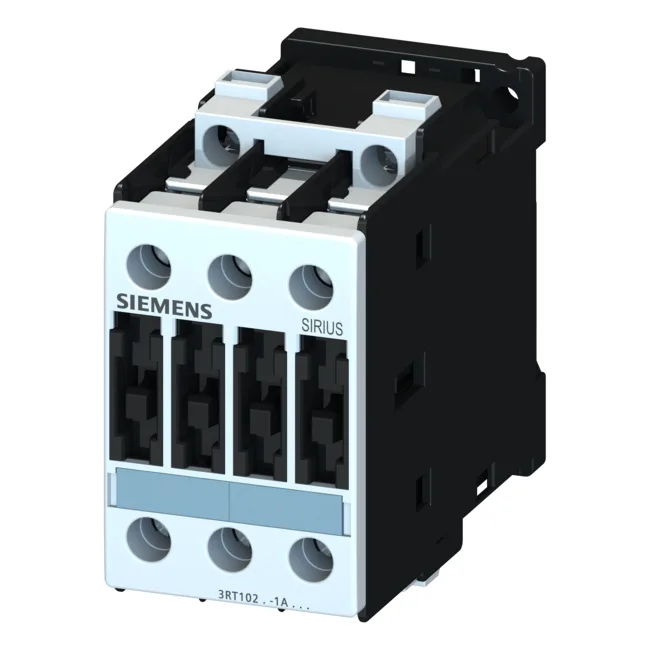
Main power terminals are screw-type; the auxiliary and control circuit uses spring-loaded terminals, so no tool is needed for the control wiring side.
The AC-4 figure is the one that governs real motor life on reversing or jogging applications; if your circuit cycles through stall current, size against the 15.5 A AC-4 row, not a higher AC-3 number. Auxiliary contact ratings cover the full control-voltage spread: 10 A at 24 V, 6 A at 230 V, 3 A at 400 V, and 0.3 A at 220 V. The 690 V main circuit rating supports 11 kW output — common for 690 V delta-connected motors in European or mining installations.
Coordination and protection requirements
These are the fusing limits for the main circuit; the auxiliary circuit has its own AWG limits (2x 24–14).
Current production stage.
Side-by-side mounting is permitted — no derating required for adjacent units. The front face carries IP20 (finger-safe), while the terminals are rated IP00 (no protection against tool or wire contact), so panel builders should cover exposed terminals with a shrouding or keep clearance in the enclosure.