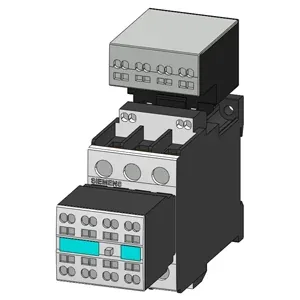
The 110 V DC coil includes a built-in varistor surge suppressor, so you don't need to add an external snubber for DC switching transients.
The AC motor ratings give you the real-world switching capacity: at 460/480 V the contactor handles 15 hp, at 575/600 V it handles 20 hp — those are the numbers that matter when you're sizing for a pump or conveyor. For DC switching, the contactor is rated 10 A at 24 V, 1 A at 110 V, and 0.3 A at 220 V; the DC-13 duty curve governs, so if you're switching solenoids or DC brake coils, stay inside those curves.
Coil pickup and drop-out — what to expect
The coil picks up at 70 % of rated voltage (0.7 x 110 V = 77 V DC) and drops out at 125 % (1.25 x 110 V = 137.5 V DC). That's a standard DC coil curve; the varistor across the coil absorbs the back-EMF when you de-energize it, which keeps the switching noise off your 24 V DC control bus. Ambient temperature range during operation is -40 to +70 °C, so it'll sit in a hot panel next to a drive or in a cold warehouse without trouble.
Wiring and clearances
Main circuit terminals are screw-type, accepting 2 x (0.25 to 2.5 mm²) solid or stranded, or up to 2 x 10 mm². The auxiliary contact block has 2 normally-open instantaneous contacts. The depth is 150 mm, height 119 mm.