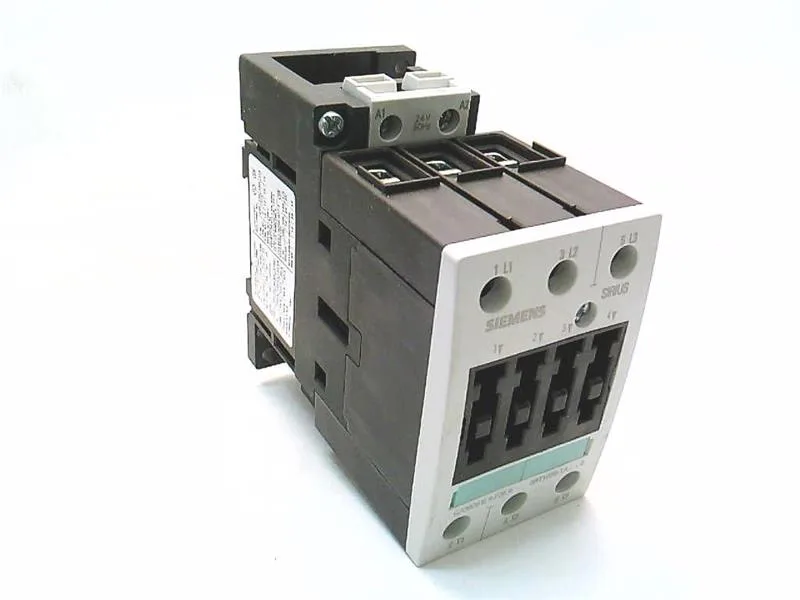
Its AC-2 rating of 18.5 kW at 400 V means it handles wound-rotor motors or reversing duty where the contactor makes and breaks the load at reduced current — not the full locked-rotor inrush of AC-3, but a higher electrical stress than AC-1 resistive switching.
The AC-3 rating is not explicitly listed, but the AC-2 figure of 18.5 kW at 400 V and the 500 V rating of 22 kW give the motor-sizing anchor. For AC-4 (plugging/inching) the maximum operating rate is 300 1/h, versus 1 000 1/h for AC-3 — so if your application cycles the contactor under full motor current every few seconds, the AC-4 rate governs the thermal duty. The mechanical life of 10 million operations is typical for this frame size; the electrical life will be lower and depends on the switching category and current. Terminals accept solid conductors up to 2x 4 mm² and stranded up to 2x 25 mm², with a combined solid-or-stranded range of 2x 0.75 to 16 mm². The screw-type terminals are straightforward for panel wiring — no special tooling needed. The front face carries IP20 — finger-safe when installed in an enclosure. Side-by-side mounting is permitted, which saves rail space when grouping multiple contactors.