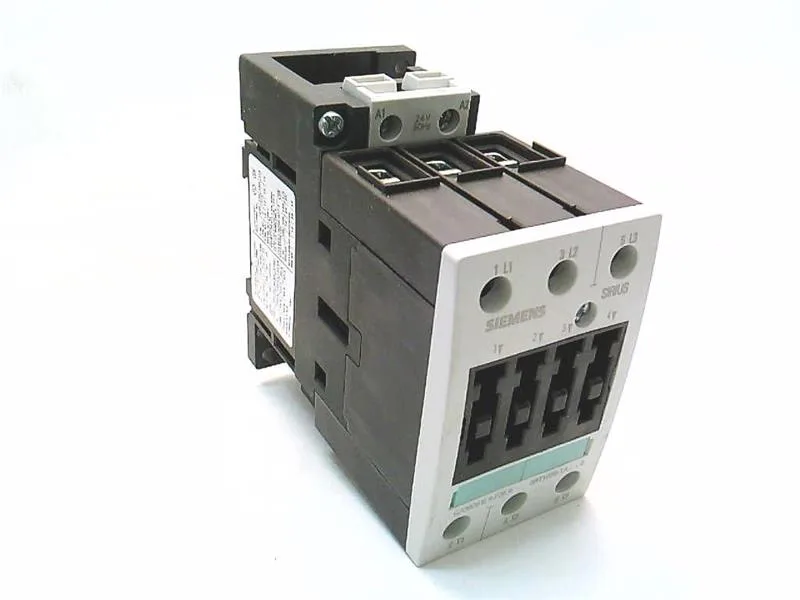
The Siemens SIRIUS 3RT1035-1AL20-ZX95 is a size S2 power contactor for motor loads up to 18.5 kW at 400 V in AC-2 duty, which covers slip-ring motor starting and plugging — the kind of repetitive, high-inertia switching that wears out a general-purpose contactor fast.
Ratings for the real duty cycle
AC-2 at 400 V: 18.5 kW. That is the motor rating that governs the coil selection and thermal overload coordination for this contactor. AC-1 resistive switching goes higher, but the buyer specifying this part for a motor line is buying the AC-2 figure. Maximum switching rates: 1200 ops/h in AC-1, 1000 ops/h in AC-3, 600 ops/h in AC-2, and 300 ops/h in AC-4 — the AC-4 rate is the one to watch if you are jogging or inching a load. Coil operating range: 0.8 to 1.1 × rated voltage at 50 Hz, 0.85 to 1.1 at 60 Hz. That arcing window matters for coordination with upstream fuses or breakers — the contactor clears the arc within that band, so the OCPD must not trip on the inrush. Pollution degree 3 — this contactor is rated for the conductive environment of a typical industrial panel, not a clean room. Side-by-side mounting is permitted, which helps when packing multiple contactors on a DIN rail, but verify the thermal derating if the ambient at the rail exceeds 40 °C.
Main circuit terminals accept solid conductors up to 2 × (0.5 to 1.5 mm²) and 2 × (0.75 to 2.5 mm²), with a maximum of 2 × (0.75 to 4 mm²). Stranded conductors: 2 × (0.75 to 25 mm²). Solid or stranded: 2 × (0.75 to 16 mm²). The screw terminals are the standard box-clamp type; torque spec is not in this record, so confirm with the nameplate or installation instructions before final torquing. The 115 mm depth leaves enough room behind the DIN rail for wiring ducts and finger-safe terminal shrouds.