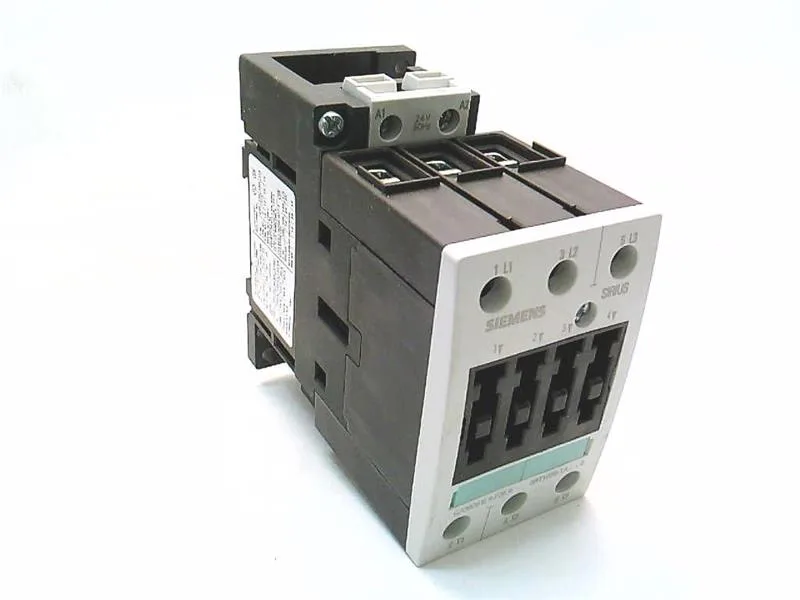
The Siemens 3RT1035-1AP04 is a SIRIUS S2-frame power contactor with screw-type terminals, sized for motor switching in control panels. Its key motor ratings: 18.5 kW at 400 V in AC-2 duty (slip-ring motors, moderate overload) and 35 A at 400 V in AC-4 duty (plugging, inching, reversing). These are the figures that govern fit for a motor branch circuit, not the higher AC-1 resistive rating.
The contactor accepts stranded conductors up to 2x 25 mm² on the main circuit, and solid or stranded wire from 0.5 mm² up to 4 mm² for the coil/auxiliary terminals. The S2 frame depth of 164 mm and height of 112 mm mean it fits standard 200 mm deep enclosures with clearance for wiring.
The RoHS compliance date is May 1, 2012, covering the EU RoHS scope.
The AC-4 rating of 35 A at 400 V governs frequent reversing or inching duty, where the contacts must interrupt full-load current at each operation. The mechanical life is typically 10 million operations, which is the contactor body's endurance before wear — electrical life will be lower and depends on the switching load.