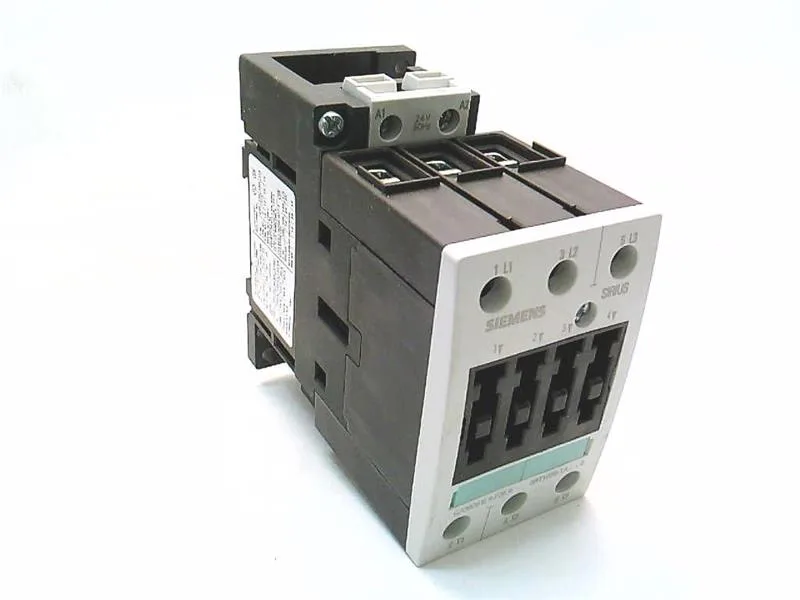
It's rated 22 kW at 500 V under AC-3 duty (the standard motor-switching category per IEC 60947-4-1), so it handles typical induction motors on 480 V or 500 V lines without derating. The AC-2 rating of 18.5 kW at 400 V covers slip-ring motor or wound-rotor applications where starting current stays closer to running current. The mechanical life of 10 million operations means it'll outlast most machines if the coil and arc chamber stay clean.
The 55 mm width and 112 mm height fit the S2 footprint — same hole pattern as other SIRIUS S2 contactors, so swapping one in doesn't mean redrilling the backplate. Side-by-side mounting is supported, so you can pack several on the same rail without a gap. Depth is 164 mm, which is the dimension you need to check for enclosure depth clearance — especially if there's a door-mounted disconnect or a shallow gland plate behind the rail. Terminals are screw-type, accepting 2x solid conductors up to 4 mm² or stranded up to 25 mm². That's generous for the 22 kW class; you can land a 10 mm² motor cable without a ferrule.
Environmental and protection
Front face is IP20, so finger-safe when installed in a closed panel. The terminal area is IP00 — exposed live parts once the wire is landed, which is normal for panel-mount contactors and expects an enclosure door interlock. The shock and vibration specs (15 g / 5 ms at AC, 8 g / 10 ms at DC) are what you'd expect for a contactor bolted to a panel in a machine tool or compressor skid.