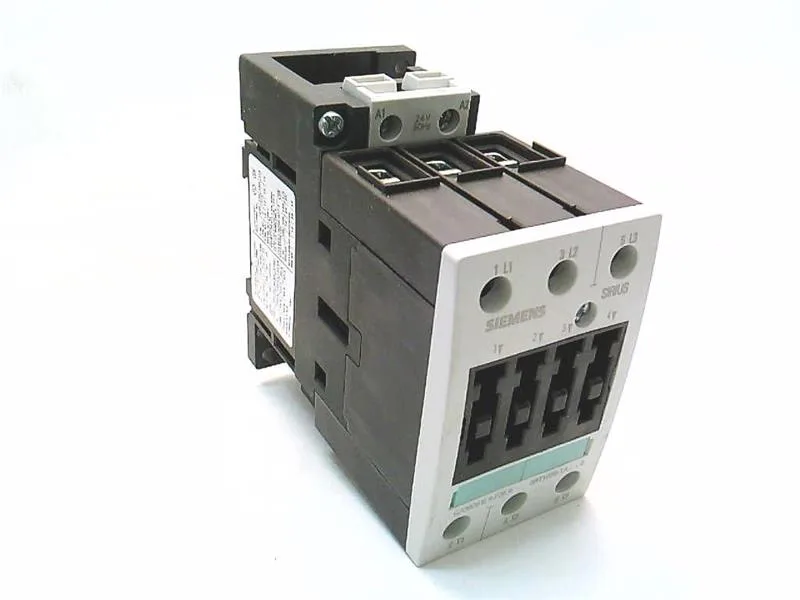
It is a current-production part, meaning it is still in active manufacture and available through authorized distribution channels. The 72 V DC coil is the key selection parameter here: this contactor pulls in on a 72 V DC control voltage, with a rated operating current of 10 A at 24 V and 2 A at 60 V. The DC coil means it is suited for systems with a DC control bus, common in some process plants and renewable energy installations. For motor switching, the AC-3 rating at 500 V is 22 kW, and at 690 V it is 11.4 kW. A 35 A AC-4 rating means it can handle the high electrical wear of frequent jogging or plugging without premature contact welding. Side-by-side mounting is permitted, which saves panel width when ganging multiple contactors for multi-speed or reversing starters.
Terminal specs and wiring
Main current circuit terminals are screw-type, accepting solid conductors from 2x (0.5... 1.5 mm²) up to max. 2x (0.75... 4 mm²), and stranded conductors from 2x (0.75... 25 mm²). At 40 °C, the minimum permissible conductor size is 16 mm² — this is the thermal derating floor, not a wiring convenience; if you land a smaller wire than 16 mm² at full rated current, the terminal temperature rise may exceed limits. The solid or stranded terminal range is listed as 2x (0.75... 16 mm²), which covers the majority of panel wiring for this frame size.
The IP00 rating on the front and terminals means it is not protected against dust or water ingress — it must be installed inside a suitable enclosure. The substance prohibition date of 05/01/2012 indicates RoHS compliance (the date after which the part was manufactured to comply with the RoHS directive). Electrical life depends on switching duty and current.
Switching frequency and timing
Maximum switching frequency at AC-1 is 1,200 ops/h; at AC-3 it is 1,000 ops/h; at AC-4 it is 300 ops/h.