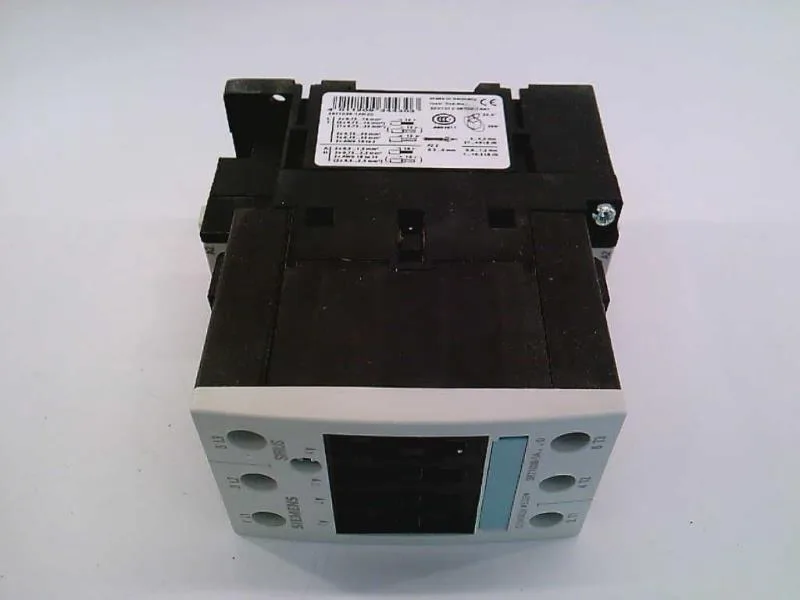
It carries a 22 kW rating at 400 V for AC-2 duty, meaning it handles slip-ring motors or other loads where the contactor closes and opens under full load current — not just starting duty. It also handles 30 kW at 500 V and 11.4 kW at 690 V, giving flexibility for higher-voltage motor circuits common in mining or pumping applications. Terminals are screw-type for the main circuit, accepting stranded wire up to 2x 25 mm², which covers most motor feeds up to this current class. Solid and stranded combinations are also specified, so you can land a mix of cable types.
AC-1 resistive ratings are higher but don't apply here; if your application is purely resistive (heaters, lighting), this contactor still works but you'd be paying for motor-rated features you don't need. Operational current ratings at various voltages — 10 A at 24 V, 6 A at 230 V, 3 A at 400 V — are for auxiliary or control circuits, not the main power path. Use the main circuit terminals for motor loads. No extra conformal coating needed in typical panel conditions. If your panel sees sustained temps above 60 °C, you'll need to derate or move the contactor to a cooler zone.
The screw terminals and S2 frame are common across the 3RT1036 series, so if you're replacing a 3RT1036-1AB00 (which uses a different coil voltage), the physical fit and wiring footprint are identical — just match the coil rating.
Snap it onto the DIN rail first, then terminate the power wires. Torque to the values on the contactor label (not listed here, but standard for the terminal size). But check the thermal derating curve if you're running all of them at full AC-2 load continuously.