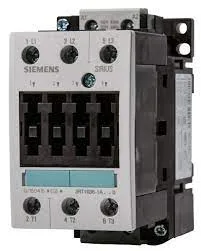
It is rated for 22 kW at 400 V in AC-2 duty (slip-ring motor starting) and 41 A at 400 V in AC-4 duty (plugging/inching), which defines its capability for demanding motor applications with high electrical wear.
The 690 V rating of 11.4 kW confirms it can handle higher-voltage distribution systems, though at reduced power. Auxiliary contact ratings cover 10 A at 24 V, 6 A at 230 V, and 3 A at 400 V — enough for pilot duty on small relays or PLC inputs, but not for main power. The switching frequency limits of 800 cycles/hour in AC-3 and 300 cycles/hour in AC-4 set the thermal ceiling for repetitive switching; exceed these and the contactor rises above its rated temperature. The IP20 rating on the front protects against finger contact; the IP00 terminal area means the connection points are exposed and require enclosure protection in the panel.
Mounting and Termination
Side-by-side mounting is permitted, which lets you pack multiple contactors without dead space, but derating for thermal accumulation should be verified per the manufacturer's guidelines. The auxiliary terminals accept 2x 0.5 to 1.5 mm² solid or 2x 0.75 to 2.5 mm² stranded. This covers common panel wire sizes from 18 AWG to 4 AWG, but verify lug compatibility for larger stranded conductors.
Shock resistance is 15 g for 5 ms and 8 g for 10 ms under AC operation, with DC operating time of 20 to 25 ms and arcing time of 10 to 15 ms. These figures matter for applications near heavy machinery or conveyors where vibration could cause contact bounce.
Compliance documentation includes RoHS substance prohibition dated May 1, 2012, covering the initial EU RoHS directive. REACH, UL, and IEC certifications are standard for the SIRIUS family, though specific cert numbers should be verified against the nameplate or manufacturer's declaration.