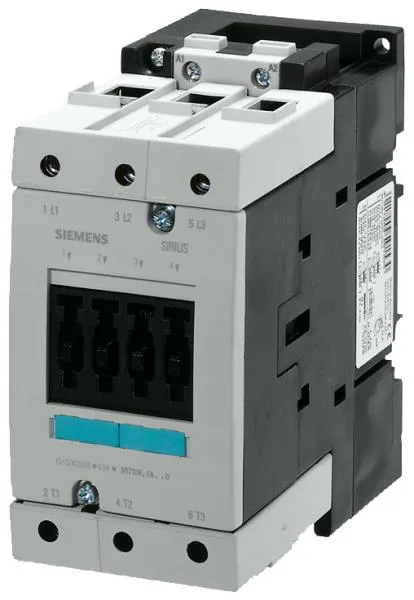
The 3RT1045-1AV04: The AC-2 rating of 37 kW at 400 V certifies this contactor for slip-ring motor duty — starting and stopping under load — which is the standard for wound-rotor motors in cranes, hoists, and conveyors. The AC-4 rating of 66 A at 400 V covers reversing and inching service where the motor is switched at standstill or during plugging, so the contactor's arc-chamber and contact material are sized for repeated make-and-break at locked-rotor current. The auxiliary contact ratings at 24 V (10 A), 110 V (1 A), and 220 V (0.3 A) define the control-circuit capacity for PLC inputs, relay coils, or indicator lamps. The 24 V 10 A rating is notably high — it can drive multiple small relay coils in parallel without a separate interposing relay.
Side-by-side mounting is permitted, so multiple contactors can be ganged without spacing for a dense motor-control center layout. Dimensions are 146 mm height, 70 mm width, and 188 mm depth, fitting into a standard S3 footprint. IP20 on the front with cover or box terminal means the front is finger-safe once installed in an enclosure; the terminal area itself is IP00, so the panel builder must ensure no live parts are accessible during maintenance.
Main circuit connections use screw-type terminals. Stranded wire is accepted from 10 mm² up to 50 mm², covering typical motor feeder sizes for the 37 kW class. For solid or ferruled conductors, the terminal accepts 2.5 mm² to 16 mm². The auxiliary circuit accepts solid wire from 0.5 mm² to 4 mm². This range covers standard control wiring (1.5 mm² or 2.5 mm²) and allows paralleling of two conductors per terminal for daisy-chaining.
Storage range is -55 °C to +80 °C, which is relevant for warehousing and transport.