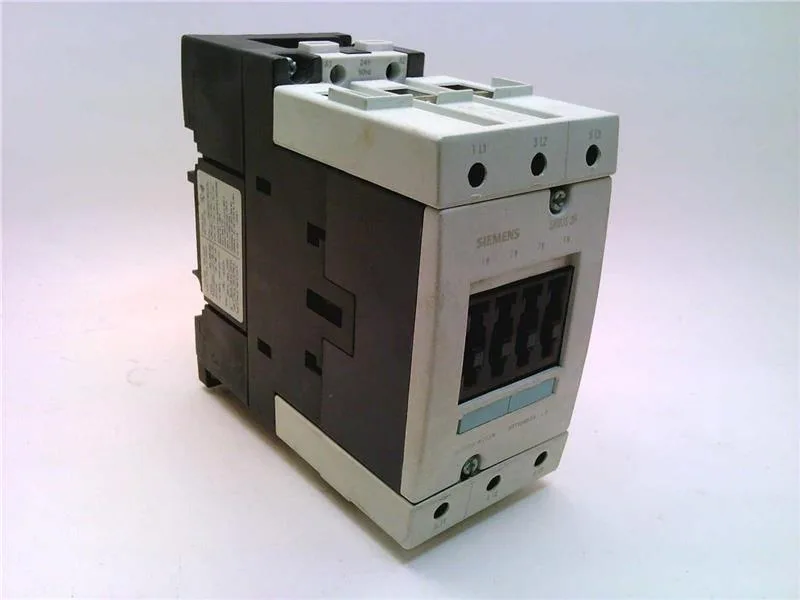
Integrator's quick-fit note
Duty-cycle reality check
The AC-3 maximum switching rate is 850 cycles per hour. That's the standard motor-start figure—conveyors, pumps, compressors running frequent starts. But if your application is AC-4 (plugging/reversing), the rate drops to 250 cycles per hour. The difference is the arc energy: reversing loads stress the contacts harder, so the contactor derates its mechanical life. For high-speed jogging or reversing, plan around the 250 c/h ceiling, not the 850 c/h headline.
Panel integration checklist
Dimensions: 146 mm high, 70 mm wide, 188 mm deep. The IP20 front with cover/box terminal means the busbar area is finger-safe once the cover is on; the terminal body itself is IP00, so keep live parts behind a panel door. Wire sizing: solid conductors accept 2x (0.5...1.5 mm²) for control, 2x (0.75...2.5 mm²) for aux circuits, and up to 2x (0.75...4 mm²) max. For the main power circuit, stranded goes to 2x (10...50 mm²). That covers up to 50 mm² for high-current feeds—no need for parallel cables in most installations.