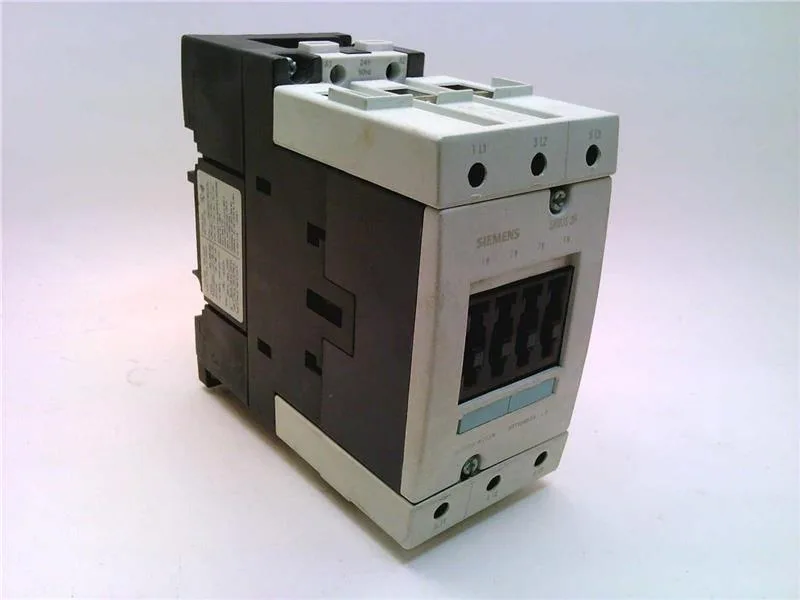
It carries a 55 kW rating at 500 V in AC-3 duty, which is the standard category for squirrel-cage motor starting — so this contactor handles the inrush and breaking of motor current under running conditions, not just resistive loads.
At 400 V, the same contactor is rated 45 kW in AC-2 duty (slip-ring motor starting) and 80 A in AC-4 duty (plugging/reversing/inching). That AC-4 current matters if your application does frequent reversing or jogging — the contactor is sized for the thermal stress of those cycles, not just the run current. Mechanical life is 10 million operations typical, and the maximum switching rates are 900 cycles/hour at AC-1, 850 at AC-3, and 250 at AC-4. For a conveyor line cycling every 30 seconds, the AC-3 rate gives headroom; for a press that reverses every 10 seconds, check the AC-4 rate against your duty cycle. The coil operates on 50 Hz with a voltage tolerance of 0.8 to 1.1 times the rated value.
Side-by-side mounting is allowed without derating for current, which saves rail space in multi-contactor panels. Terminals accept solid conductors up to 4 mm² (2x) and stranded up to 50 mm² (2x).
Protection and environment
The enclosure is IP20 on the front with the cover or box terminal fitted; the terminal area itself is IP00. That's standard for panel-mounted contactors — not for washdown or outdoor use. In a steel mill near the rolling stands, the +60 °C operating limit means it can sit in a warm cabinet but not directly above a furnace. Compliance documentation (RoHS, REACH) is typically available from Siemens on request for the SIRIUS series.