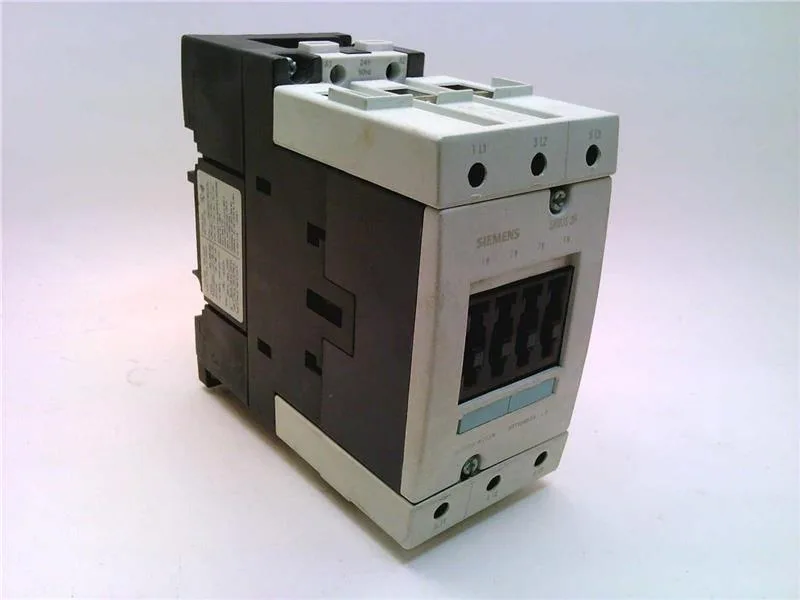
The Siemens 3RT1046-3AP06 is a SIRIUS S3 power contactor — the S3 frame size slots it between the compact S2 and the heavy S6/S10 frames, sized for motor loads up to 45 kW in AC-2 duty (400 V) or 55 kW at 500 V. The screw-type main terminals accept 2x (10 … 50 mm²) stranded or 2x (0.25 … 2.5 mm²) solid, which covers the range from a 10 mm² motor feed up to a 50 mm² bus tie.
What the AC-4 and AC-2 ratings mean for your load profile
AC-4 is the hardest thermal and mechanical duty class; the 80 A figure means this contactor handles a 400 V motor that draws 80 A in the locked-rotor condition without welding the main poles. For comparison, the AC-3 switching capacity (not listed directly here) would be higher — AC-3 breaks running current, not locked-rotor — so if your application is pure across-the-line starting and running, you have headroom above 80 A. The AC-2 rating of 45 kW at 400 V applies to slip-ring motor duty where the contactor switches the rotor circuit — wound-rotor motors in cranes, hoists, or conveyors with secondary resistance starting. If your BOM calls for a contactor on a slip-ring motor secondary, this is the rating to size against. At 690 V the rated motor power drops to 25.4 kW — a derate that reflects the higher arc energy at elevated voltage. If your line runs 690 V, confirm that 25.4 kW covers your load; if not, step up to the S6 frame.
Operating conditions and enclosure integration
Rated for -25 to +60 °C ambient during operation, with storage tolerance from -55 to +80 °C. The terminal area itself is IP00, so live bus bars are exposed if the contactor is mounted without a shrouded terminal cover. Side-by-side mounting is permitted (no derate gaps needed), which is typical for SIRIUS S3 contactors in a motor control centre lineup. If the panel environment sees heavy dust or conductive fibres, consider a conformal-coated variant.