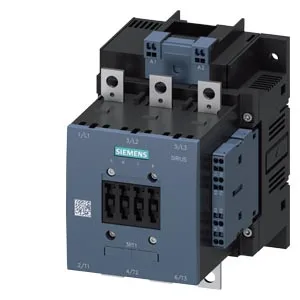
Screw-fixing mount, with the coil terminated via spring-type terminals — no tool needed for the coil connection, which saves a step during panel build or swap. The coil pulls in on 110–127 V AC; the contactor carries an integrated auxiliary switch block, so you get one less add-on to spec.
Rated for AC-3 motor switching at up to 1,000 operating cycles per hour, with AC-4 (inching/plugging) duty capped at 130 ops/h — that 130 figure is the one to watch if your application does frequent reversals or jogging; exceeding it accelerates contact wear. The auxiliary contacts are rated 10 A at 24 V, 2 A at 48 V and 60 V, and 1 A at 110 V — choose your control voltage accordingly; the 110 V derating is steep enough that a 24 V control circuit gives you more headroom on the aux side.
Integration notes — panel fit and wiring
Main power terminals accept stranded 25–120 mm²; coil and auxiliary terminals take 2x 0.25–2.5 mm² solid or stranded. The spring-type coil terminals (no screw) mean the control wiring lands faster and stays secure under vibration — a detail worth noting if the panel sees pump or compressor rumble. That 20 mm forward clearance is the critical one — ensure the enclosure door or busbar shroud doesn't crowd the arc chute.