The DC switching curve is the key selection parameter here. At 24 V rated value the contactor handles 10 A; at 60 V it drops to 2 A; at 110 V it's 1 A; at 220 V it's 0.3 A. That steep derating is normal for DC interruption — there's no zero-crossing, so the arc has to be stretched and quenched by the contact gap. If you're switching a DC motor brake or a solenoid valve at 24 V, the 10 A rating gives you headroom; at higher DC voltages the contactor is really only for signal-level or small auxiliary loads.
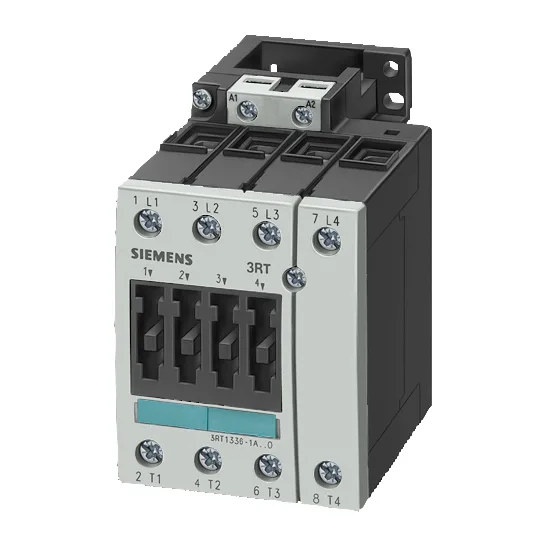
The contactor occupies 73 mm width, 142 mm height, 130 mm depth. Main circuit terminals accept solid or stranded wire: 2x (0.75... 16 mm²) or 2x (0.75... 25 mm²) stranded, and 2x (0.25... 2.5 mm²) solid. AWG equivalents for the main contacts are 2x (18... 2). The auxiliary circuit terminals are rated for 6 kV impulse withstand; the main circuit is rated 8 kV. That impulse rating tells you this contactor is designed for industrial environments with moderate surge exposure — it's not a toy for clean-room signal switching.
The substance prohibition (RoHS) compliance date is 05/01/2012, so it's RoHS-compliant. The contactor is rated for 10,000,000 typical mechanical operations. The built-in varistor surge suppressor is a practical detail — it saves you an external suppression module on the coil circuit, which simplifies panel wiring and reduces component count.