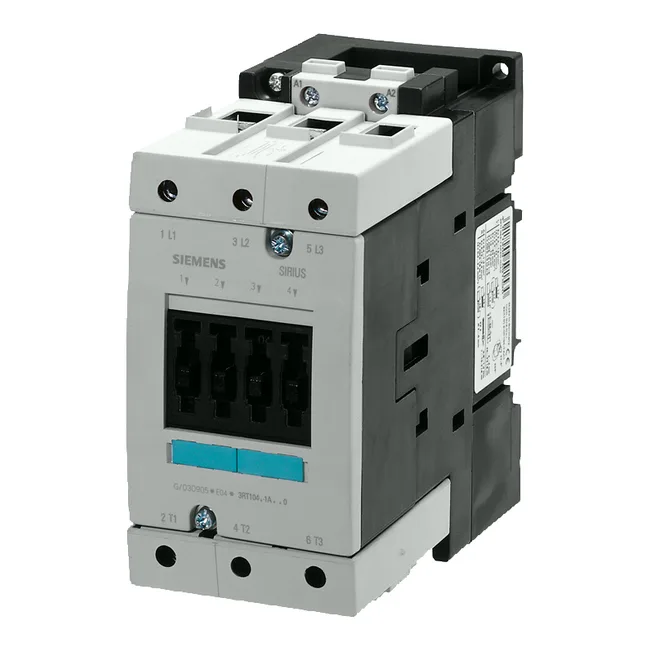
It carries a 24 VDC coil and is rated for an insulation voltage of 1 000 V, with a degree of pollution 3 — meaning it handles industrial atmospheres with conductive dust or humidity without derating. Motor power ratings define the real-world capability: at 400 V AC-2 duty it switches 22 kW; at 690 V at 60 °C it handles 148 kW. These numbers tell you the contactor is sized for heavy motor loads — think large pumps, compressors, or conveyor drives on a 690 V line. Auxiliary contact ratings cover control-circuit switching: 10 A at 24 V, 6 A at 230 V, 3 A at 400 V, and 0.3 A at 220 V DC. That range means it can pilot PLC outputs or relay coils across common control voltages.
Dimensions are 146 mm high, 70 mm wide, 152 mm deep — the depth is the key fit check for shallow enclosures or gland-plate clearance. The S3 frame is larger than the S0 or S2 siblings, so verify the back-panel layout before committing the BOM line. Wire sizes accepted: solid 2x (0.5 to 1.5 mm²), 2x (0.75 to 2.5 mm²), max 2x (0.75 to 4 mm²); stranded 2x (10 to 50 mm²); and solid/stranded 2x (2.5 to 16 mm²). The 50 mm² stranded capacity tells you this contactor can terminate heavy power cables without a lug kit.
The wide storage range is typical for warehouse or site-staging conditions — the operating limit is what governs panel ambient. Protection rating is IP20 on the front with cover or box terminal; the terminal itself is IP00. That means the contactor is protected against finger contact on the front face, but the wiring compartment needs enclosure-level protection — standard for panel-mount gear. RoHS compliance date is 05/01/2012 — the part meets EU substance restrictions from that date forward. No UL or CSA listing appears in the spec record, so verify with the full datasheet if your site requires those marks.