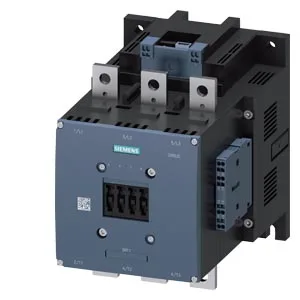
Screw-fixed to a vertical mounting surface, it can be rotated ±90° or tilted ±22.5° front-to-back, giving panel builders flexibility in tight enclosures. Its 225 mm depth, 160 mm width, and 214 mm height mean it needs generous cabinet space — not a DIN-rail shoehorn. The 11 mm fixing holes and screw-fastening method are standard for this frame class.
DC switching capability — the numbers that matter
This contactor is built for DC loads, with a 110 V DC coil and a rated switching current that drops as voltage climbs: 6 A at 24 V, 2 A at 48 V, 2 A at 60 V, 1 A at 110 V, 0.9 A at 125 V, and 0.3 A at 220 V. At higher DC voltages like 230 V and 400 V it handles 6 A and 3 A respectively, but the 480 V and 600 V ratings — 180 A and 192 A — look like AC-1 or motor-duty figures, not DC. Watch the duty cycle labels when selecting; the DC-1 maximum switching frequency is 250 operations per hour, versus 600 for AC-1. For inductive DC loads like solenoids or DC motor brakes, factor that lag into your safety circuit timing.
Thermal limits and terminal capacity
The main power terminals accept two conductors per pole, solid or stranded, 0.25 to 2.5 mm² — typical for control wiring up to 14 AWG.
Marked as current production — no phase-out notice on record. The SIRIUS S12 platform is widely specified, so this order code is a standard BOM line, not an end-of-life scavenge.