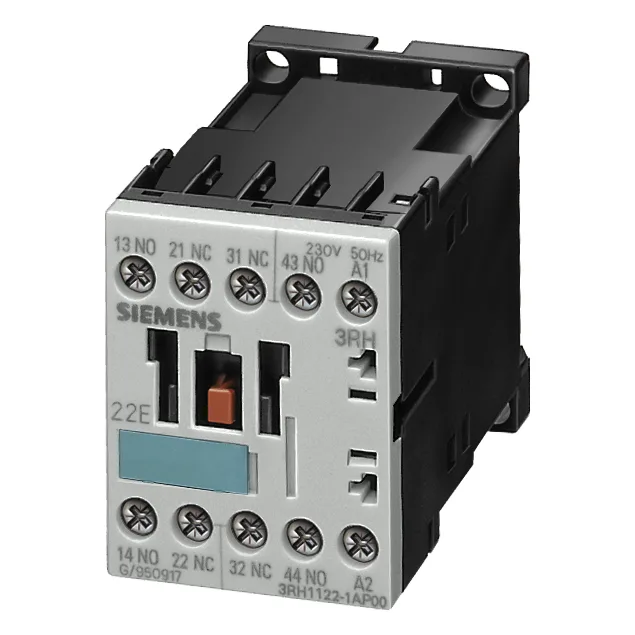
For DC loads, the contactor is rated 10 A at 24 V, 2 A at 60 V, 1 A at 110 V, and 0.3 A at 220 V. For AC loads at 50/60 Hz, it handles 6 A at 230 V, 3 A at 400 V, and 0.8 A at 440 V. Those are AC-1 resistive ratings; for motor (AC-3) duty you'd typically derate further — the S00 frame is sized for smaller motors up to about 4 kW at 400 V, but always check the motor full-load amps against the contactor's AC-3 rating in the full datasheet. Auxiliary contacts are rated 9 A per NO and per NC, with zero built-in auxiliary contacts on this variant (instantaneous contact count is 0). That means you need to add a separate auxiliary contact block if your PLC needs feedback or if you're interlocking with another device.
Dimensions are 57.5 mm high, 45 mm wide, 72 mm deep — that's a tight footprint for a contactor, so it fits in shallow enclosures and leaves room for finger-duct alongside. Screw-type terminals on the main circuit accept 2x (0.5 to 1.5 mm²), 2x (0.75 to 2.5 mm²), or up to 2x (0.75 to 4 mm²). That helps when you're fitting it into a panel that's not perfectly plumb or when you need to orient the coil terminals toward the wiring duct.
Environmental limits and protection
Protection rating is IP20 on the front and at the terminals.
Coil and performance data
Coil consumption at 50 Hz is 0.27 A (presumably at the rated coil voltage, which isn't stated here — verify the coil code suffix on the full part number). At 60 Hz it draws 5.1 VA. That's low enough to be driven by a standard 24 VDC PLC output or a small control transformer, but check the inrush: contactor coils pull several times holding current for the first 20-80 ms. Operating times: AC coil pick-up is 4 to 30 ms, DC coil pick-up is 25 to 100 ms. Drop-out times follow similar ranges. The mechanical service life is 30 million operations typical, and maximum switching frequency is 1,000 cycles per hour at AC-1 — that's about one cycle every 3.6 seconds, fine for most conveyor and pump cycling but not for high-speed indexing. Clearance distance at the side is 6 mm, which is the minimum air gap to grounded metal for the rated impulse voltage. Keep that in mind when laying out the rail — if you're mounting a surge suppressor or another device tight alongside, maintain that 6 mm to avoid flashover.