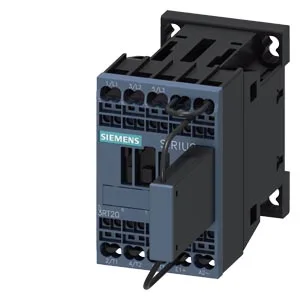
110 V DC coil, spring terminals — what that means for your control circuit
The 3RT2017-2KF42-1LA0 carries a 110 V DC coil — that DC rating matters because the hold-in current is continuous, not zero-crossing like AC. If your control transformer or DC supply is already 110 V nominal, this drops straight in. If you're swapping from an AC coil contactor, the suppression network on the DC side is different: a freewheeling diode across the coil, not an RC snubber. The coil termination uses spring-type terminals (push-in), not screw clamps. Auxiliary contacts are built in — no add-on block needed for basic status feedback. That 11 A at 480/600 V is the AC-15 rating for solenoid loads; the DC values follow the standard derating for inductive DC break.
DIN rail footprint and clearance — panel layout constraints
Size S00 means 45 mm wide, 70 mm high, 121 mm deep. The snap-on feature means no tools for initial placement — useful when populating a rail with multiple contactors. In a dense panel, that 6 mm side gap is the binding constraint — adjacent contactors or terminal blocks need that minimum air gap for arc flash and heat dissipation. Mounting position is standing on a horizontal surface.
Mechanical life and switching frequency — how hard can you cycle it?
That's a high-cycle contactor — suitable for frequent starts in conveyor, packaging, or HVAC damper applications where the contactor cycles many times per hour. At AC-4 maximum (plugging/reversing duty), the switching rate is 250 operations per hour. That's the duty limit for heavy inrush loads like motor reversing — above that, the contact wear accelerates and the thermal capacity of the arc chamber is exceeded.
Sourcing and lifecycle — current production, quoted to order
Sourced through independent distribution channels. No minimum order quantity beyond the manufacturer's standard pack; lead time varies with production batch.