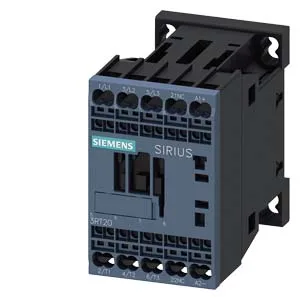
S00 frame, DC coil — what this contactor is for
The 3RT2018-2XB42-2LA2: The DC coil is rated 24–34 VDC, so it runs cleanly on a standard 24 V control supply with tolerance for a sagging bus. Spring-type terminals on the coil and main contacts mean no screw torque to check — strip, insert, done.
Panel fit and clearance
The envelope is 45 mm wide, 70 mm tall, 73 mm deep — the S00 width is the tightest in the line, so you can pack more contactors per DIN-rail metre than an S0 or S2 frame. Clearance requirements: 10 mm above, below, and forward; 6 mm to the sides. That side gap is tight — if you're stacking contactors side-by-side without a spacer bar, the arc chambers need that 6 mm to vent hot gases without flashover between poles.
DC coil behaviour and drive requirements
The DC coil pulls a 2.3 A inrush peak when energised, then settles to a holding current determined by the 24–34 VDC range. That inrush matters — if a PLC relay card or small solid-state output drives this coil, the contact must handle the surge without welding or dropout. Dropout time is 25–45 ms at DC, which is fast enough that the contactor clears before a downstream short-circuit protection device sees the fault current. Arcing time across the main contacts runs 10–15 ms — the arc extinguishes within one cycle at 50 Hz, so the upstream breaker's short-time delay won't see it as a fault.
The AC-4 maximum switching rate is 250 operations per hour — that's the plugging or inching ceiling; continuous AC-3 switching runs faster but isn't specified here.
Temperature range and mechanical endurance
That covers unheated enclosures in cold climates and panels near process heat without derating. Mechanical life is 30 million cycles typical — the contactor outlasts most machines it controls. Electrical life at full rated load is lower and depends on switching frequency and load type; for AC-3 motor starting at rated current, expect several hundred thousand operations before contact replacement.