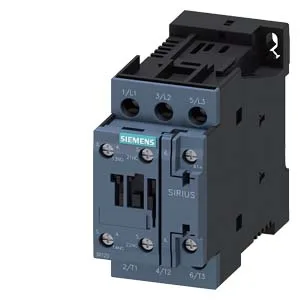
S0 frame, 72 V coil, screw terminals
The 3RT2024-1BJ80: The 72 V rated coil with an initial pick-up tolerance of 0.8x rated value and a full-scale dropout of 1.1x means the coil pulls in reliably at 57.6 V and drops out above 79.2 V — a wide hysteresis that prevents chatter on a sagging 72 V bus. The auxiliary switch is included, so no separate add-on block is needed for basic status feedback.
Mounting and clearance for panel fit
The 45 mm width, 85 mm height, and 107 mm depth fit the standard S0 envelope — measure the DIN rail span before committing the panel layout. These are the air and creepage distances for the 72 V coil circuit — crowding closer risks flashover in humid or dusty environments.
Switching duty and contact life
Rated for 1,000 operating cycles per hour in AC-1, AC-2, AC-3, and AC-3e duty — that is continuous switching at 16.7 cycles per minute, typical for conveyor and pump cycling. In AC-4 duty (inching/jogging) the rate drops to 300 cycles per hour, reflecting the higher arc energy during plugging or reversing. The arcing time is 10 ms and the DC dropout delay is 15 to 18 ms — the dropout delay matters for coordinated undervoltage release schemes where the contactor must hold in through a brief sag but drop before the upstream breaker trips.
Auxiliary contact ratings across DC voltages
The steep derating above 24 V reflects DC arc extinction limits — at 220 V the contact gap can only break 0.3 A before the arc self-sustains. For PLC input circuits at 24 V the full 10 A rating is available, but interposing relays on higher DC rails need the derated figure.
The 85 °C spread between storage and operating limits is typical for industrial contactors — the coil insulation class handles the wider storage envelope, but the magnetic circuit derates above 60 °C ambient.