Integrator's first look
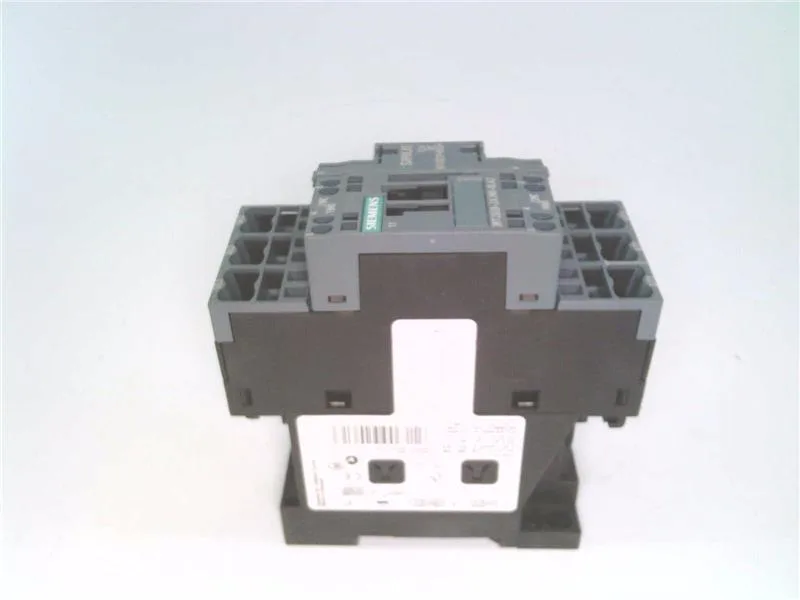
Spring-type terminals on both coil and main contacts mean no screw torque to verify — strip, insert, release.
The DC coil at 72 V rated value with a pickup ratio of 0.7 (initial value) means the coil pulls in reliably at about 50 V and holds down to that threshold — useful if your DC bus has droop under load. Arcing time is a tight 10 ms, which keeps contact wear predictable in DC switching. Switching frequency maxes at 750 1/h for AC-1, AC-2, AC-3, and AC-3e duty; drop to 250 1/h for AC-4 (plugging/inching). That AC-4 ceiling is the real limiter if you're jogging a motor repeatedly — plan the cycle rate around it.
DC switching capability across voltages
For DC load switching, the contactor is rated at 10 A at 24 V, 2 A at 48 V and 60 V, 1 A at 110 V, 0.9 A at 125 V, 0.3 A at 220 V, and 3 A at 400 V. The 5 hp rating at 230 V is an AC motor reference — for DC circuits, use the current/voltage table directly. These are the make/break capacities; for continuous current, the main contact rating (18...8 A range) governs.
Spring-type terminals accept solid conductors 2x (1...10 mm²) and stranded 2x (0.5...2.5 mm²). Clearance distances: 10 mm upward, forward, and downward; 6 mm at the side. The auxiliary switch is included (yes), so no separate add-on for status feedback. Size S0 frame keeps the footprint compact for multi-contactor groups.