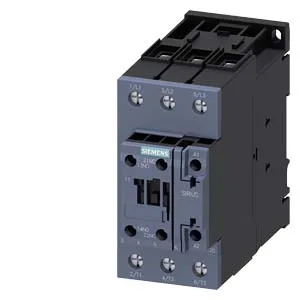
That 480 V figure is the AC-3 motor-switching rating — the one that decides whether it holds a 40 A motor load under full locked-rotor inrush. It also carries a 1 200 ops/h maximum at AC-1 (resistive load) and 1 000 ops/h at AC-3, so it keeps up with a fast-cycling conveyor or pump station without derating the duty cycle.
Integration & Panel Fit
Dimensions: 114 mm high, 55 mm wide, 130 mm deep. That 6 mm side gap is tighter than the vertical ones; plan for it when grouping contactors side-by-side. Coil connection uses screw-type terminals. Main contact wiring accepts 2x (0.5... 1.5 mm²) solid or stranded, or 2x (0.75... 2.5 mm²). That's a standard range for control panels — no need for special ferrules or oversized lugs.
Duty & Mechanical Life
Switching rates: AC-1 max 1 200 ops/h, AC-2 max 750 ops/h, AC-3 max 1 000 ops/h, AC-4 max 300 ops/h. The AC-4 rate (300 ops/h) is the limiting factor for plugging or inching duty — if the application reverses the motor frequently, stay under that ceiling. Auxiliary switch is included as standard — no separate add-on block needed for basic signaling or interlocking. Arcing time is 10... 20 ms; the coil dropout time at AC is 10... 18 ms. That dropout window matters for sequencing: if you're interlocking two contactors, the break-before-make gap is at least 10 ms.