Rated switching capacity varies by load voltage: 10 A at 24 V DC, 10 A at 230 V AC, 3 A at 400 V AC, and 0.3 A at 220 V DC — the DC curve drops fast above 60 V, so watch your inductive DC loads. Mechanical life is 10,000,000 operations typical; electrical switching frequency maxes at 5,000 cycles per hour on AC duty, 1,000 per hour at AC-1 maximum.
Panel Fit and Clearances
Dimensions are 85 mm high, 61 mm wide, 107 mm deep — the 107 mm depth is the dimension to watch when spacing against a gland plate or back panel. Minimum clearance to adjacent components: 0 mm upwards, forwards, and backwards; 6 mm at the sides. That zero-clearance on three faces means you can pack contactors tight in a row, but the 6 mm side gap is mandatory for arc flash containment. Handy for angled subpanels or tight enclosures.
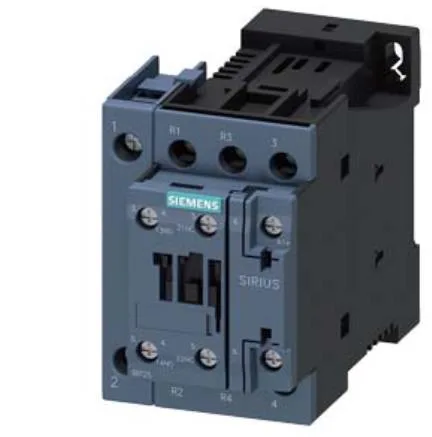
Screw-type terminals accept solid or stranded wire: 2x (0.5 to 1.5 mm²) or 2x (0.75 to 2.5 mm²). That covers standard control wiring up to 14 AWG; no ferrule requirement for stranded, but ferrules help in repeated disconnect scenarios. An auxiliary switch is included (yes), so you get a built-in feedback contact for PLC input or status lamp without bolting on a separate block.
Environmental Range
Arcing time is 10 to 10 ms — consistent, short arc extinction for a contactor this size, which helps with contact life in inductive switching.