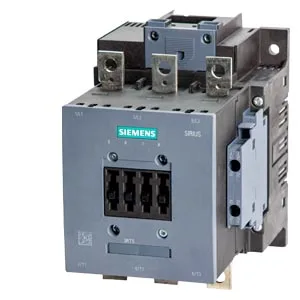
The 3RT5055-6AF36: Coil is 110-127 V AC at 50 or 60 Hz (the 0.8 A inrush at both frequencies tells you the hold-in is solid). Motor-side: it's rated 55 kW at 690 V, 60 kW at 230 V, and 105 kW at 400 V. That's a serious chunk of iron — think big conveyors, crushers, or pump sets that pull real current.
Mounting and wiring realities
Fastens with screw fixing and allows side-by-side mounting — you can pack these tight in a row if the heat calcs allow. That helps when the panel layout is already tight. That's substantial wire — plan your lug kit accordingly. Surge suppression is built in with a varistor across the coil — one less thing to add externally.
Thermal and endurance picture
If your panel sits near a hot process line or in an unheated shed, those numbers cover it. Switching frequency maxes at 2,000 cycles per hour for both AC and DC control, with AC-1 resistive loads hitting 800/h and AC-3 motor loads at 750/h. AC-4 (plugging/reversing) drops to 130/h — that's the duty cycle limit for inching or jogging.
Insulation voltage rated at 1,000 V; maximum AC-3e operating voltage is 1,000 V. RoHS compliance date is March 1, 2017. The brand provides standard Siemens declarations of conformity and material compliance — ask for the specific certificates with your RFQ.