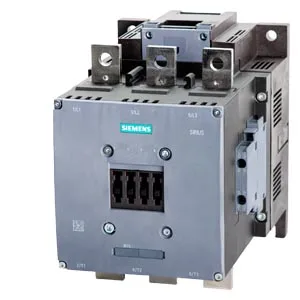
Rated insulation voltage is 1,000 V, and the AC-3e maximum operating voltage is also 1,000 V, so this contactor handles standard 400 V and 690 V motor circuits comfortably. The coil is rated 220–240 V AC at both 50 Hz and 60 Hz, drawing 6 A at 230 V. A built-in varistor surge suppressor handles the inductive kick on coil dropout.
At 400 V and 60 °C ambient, the contactor is rated for 263 kW — that's the motor power it can switch in AC-3 duty (squirrel-cage motors, starting and disconnecting during running). At 690 V the same duty yields 133 kW. At 230 V and 60 °C it handles 151 kW. These are the numbers that govern the real-world selection: match the motor's rated power and voltage to the contactor's AC-3 rating at the panel's ambient temperature. The 60 °C rating is the one to use for enclosed panels with limited airflow. Maximum mechanical service life is 10 million operating cycles. Switching frequency varies by duty: 2,000 operations per hour for general AC and DC use, 700/h for AC-1 (resistive), 500/h for AC-3 and AC-3e (motor), and 130/h for AC-4 (plugging/inching).
Main current circuit connections are screw-type terminals, sized for cable cross-sections up to 300 mm² at 40 °C or 240 mm² at 60 °C. The contactor supports side-by-side mounting without derating, which simplifies multi-contactor panels. Physical dimensions: 214 mm high, 160 mm wide, 225 mm deep. That depth is the dimension behind the panel — account for it when laying out gland plates and wiring ducts.
The storage limit governs handling during shipping and warehousing, not running conditions.