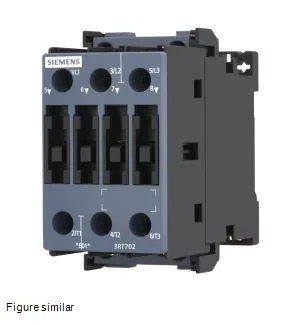
The AC-3 maximum operating voltage of 690 V means this contactor can switch three-phase induction motors on 400 V, 480 V, or 600 V systems without exceeding the insulation voltage rated value of 690 V. The degree of pollution 3 rating confirms it handles conductive dust and humidity found in typical industrial enclosures. Auxiliary contact reliability is specified for PLC control at 17 V and 5 mA, so the built-in auxiliary contacts can directly signal a 24 VDC PLC input without an interposing relay. The auxiliary contact ratings at 230 V (6 A), 400 V (3 A), and 690 V (1 A) cover signal switching for most control circuits. For short-circuit protection, Type 1 coordination requires a 63 A gL/gG fuse, while Type 2 coordination (which limits contact damage) calls for a 25 A gL/gG NH 3NA fuse. These values are what you give the panel builder for the branch circuit design. The DC coil consumes 0.82 W during pickup and 0.24 W holding, so the control transformer or 24 VDC supply only needs to budget about 1 VA per contactor.
The 45 mm width and 91 mm depth let it fit in shallow enclosures where deeper contactors would hit the gland plate. Screw-type terminals on both main and auxiliary circuits accept 2x (0.5 to 1.5 mm²) solid or stranded, or 2x (0.75 to 2.5 mm²) — no ferrule needed for solid wire, but use ferrules on stranded for reliable connection. This helps when routing wires in tight cabinets or when the contactor sits on a swing frame.