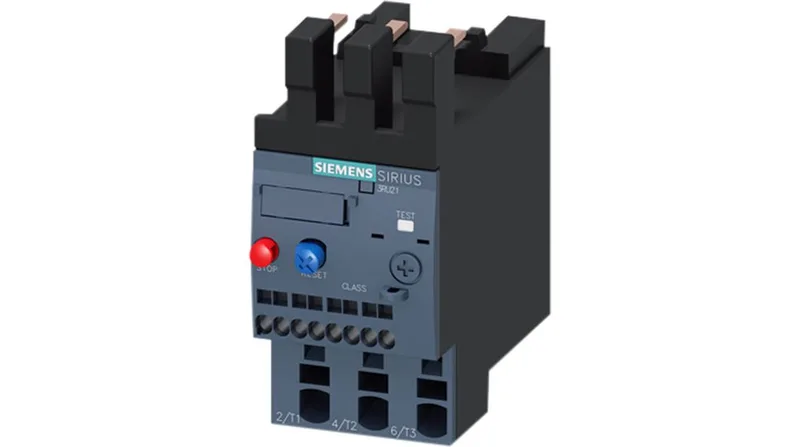
Trip Class 10 — what it means for motor protection
The 3RU2126-4EC0: The thermal bimetallic release tracks the motor's I²t heating curve, not instantaneous overcurrent — it protects against sustained overloads while allowing normal starting transients.
Mounting and termination — panel-fit constraints
Fastens directly to the contactor via the integrated mounting interface — no DIN-rail bracket needed, which saves 45 mm of panel width compared to a rail-mounted block. Mounts in any position, so vertical or horizontal contactor orientation is acceptable — useful when panel layout forces a non-standard contactor angle.
Auxiliary contact ratings — what the voltage columns tell you
At 690 V AC the auxiliary contact is rated 0.75 A — this is the ceiling for signaling in 690 V control circuits common in European industrial installations. The 'for message Tripped' note means the auxiliary contact changes state when the overload trips — it's a normally-closed break contact in series with the contactor coil, not a separate alarm relay.
Motor power coverage across common voltages
Rated motor power at 400 V is 15 kW, at 500 V is 18.5 kW, and at 690 V is 30 kW — the power scales with voltage because the current setting range stays constant. Current ratings at 480 V and 600 V are both 32 A — this is the thermal current setting ceiling; the actual motor FLA must be set within the relay's adjustment range, not at the maximum.
Environmental and compliance footprint
Storage and transport limits are -55 to +80 °C — wide enough for unheated warehouses and container shipping. Substance prohibitance date is 10/01/2009 — this aligns with the original EU RoHS directive; the relay is RoHS-compliant for the European market. MTTF with high demand rate is 2,280 years — this is a calculated figure for the electromechanical mechanism under continuous cycling, not a warranty period.
Sourced through authorized distribution channels; volume pricing and lead time confirmed at RFQ against the specific quantity and delivery window.