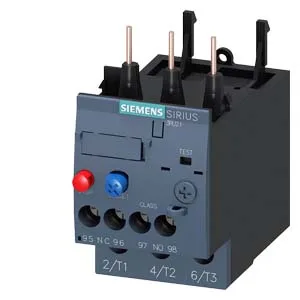
The relay mounts directly onto a contactor via the contactor-mounting fastening method, eliminating the need for separate panel wiring between the two devices. It is sized in the S0 frame, which determines the physical envelope and the range of contactors it mates with.
At 400 V it is rated for 15 kW motor output; at 500 V for 18.5 kW; at 690 V for 22 kW. These are the values that govern real motor protection sizing, not the headline current alone. The auxiliary contact integrated into the relay is rated for switching at various control voltages: 2 A at 24 V, 3 A at 120 V, 2 A at 230 V, and 1 A at 400 V. These ratings cover the typical PLC input or contactor coil signal that the trip message drives.
Mounts in any position, directly to the contactor — no DIN-rail bracket needed for the relay itself, though the contactor typically snaps onto a DIN rail. The main circuit connection uses ring cable lugs (M4 screw); the auxiliary circuit uses the integrated screw terminals with a Pozidriv PZ2 tip, 5–6 mm shaft diameter.
Substance compliance per RoHS is indicated by a substance-prohibitance date of 10/01/2009, confirming the part meets the EU RoHS directive. No separate UL or CSA listing is recorded in the available data, but the SIRIUS family typically carries CE and UKCA for the European market.