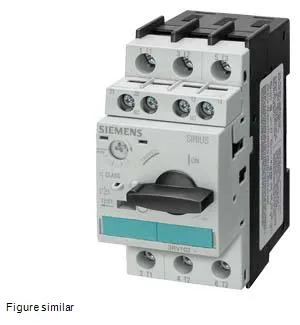
Its 0.16 A continuous current rating and CLASS 10 trip curve mean it protects small motors from overload and short-circuit without nuisance tripping during start-up — the CLASS 10 characteristic clears before the motor windings overheat on a stalled rotor.
The 0.16 A continuous rating is the key selection number — it governs the motor full-load current the breaker protects. For a 0.04 kW motor at 400 V, that lines up. The CLASS 10 trip class means the breaker will hold through a normal motor start (typically under 10 seconds of inrush) but trip quickly on a locked rotor. If your motor has a longer acceleration time (high-inertia loads like fans or centrifuges), you may need CLASS 20 — but for standard pumps and compressors, CLASS 10 is correct. The 690 V rated insulation voltage and 6 kV surge voltage rating confirm it handles the voltage stress in 400 V and 690 V systems. The 100 000 mechanical endurance cycles mean it lasts the life of the machine in normal switching duty.
Snap-on DIN rail mounting per EN 50022. Screw terminals accept 1 to 2.5 mm² solid or stranded (two conductors per terminal) and 2.5 to 6 mm² (two conductors). AWG equivalents: 2x 14 to 10. No backwards or side clearance needed (0 mm per,). IP20 on the front protects against finger contact. Shock resistance 25g / 11 ms. Maximum operating altitude 2 000 m without derating.