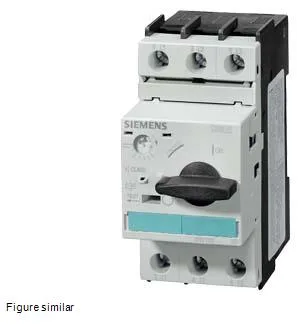
Rated 100 kA interrupting capacity at both 240 V and 400 V AC, dropping to 42 kA at 500 V and 6 kA at 690 V — the 400 V figure is the one that governs most North American 480Y/277 V panels, and at 100 kA it sits well above typical available fault current in a motor control center. The 6 kV rated surge voltage resistance (impulse withstand) covers the transient environment of an industrial panel fed by a 480 V transformer.
Mounting and integration — DIN rail, screw terminals, IP20 front
The 45 mm width (three 15 mm modules) fits a standard DIN-rail footprint; depth is 96 mm, height 97 mm. Terminals accept solid and stranded conductors: 2x (1 to 2.5 mm²) and 2x (2.5 to 6 mm²), or 2x (14 to 10 AWG). Finger-safe touch protection on the front; Shock resistance rated at 25g for 11 ms — suitable for mounting on a machine frame or near a vibrating conveyor drive.
Lifecycle and sourcing — active production, no obsolescence concern
Substance prohibitance date of 01.05.2012 refers to RoHS compliance effective date; the part is RoHS-compliant and REACH-registered as standard for Siemens industrial controls.
How the 3RV1421-1JA10 compares to the 3RV1011-1HA10
The 3RV1011-1HA10 is a smaller-frame SIRIUS breaker (45 mm wide, same footprint) but rated for motor protection rather than transformer protection. The 3RV1421-1JA10 has a Class 10 trip curve tuned for transformer inrush; the 3RV1011-1HA10 uses a Class 10 or Class 20 curve depending on variant. Both mount on the same 35 mm DIN rail with the same terminal ranges. If a panel was specified around the 3RV1011-1HA10, the 3RV1421-1JA10 will physically drop in without rewiring — same width, same rail, same terminal capacity — but the trip curve difference means you must verify the load is a transformer, not a motor, to avoid nuisance tripping on motor start.