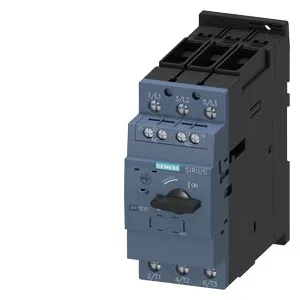
Rated for supply voltages from 20 to 690 V AC, it covers the common low-voltage motor circuits found across European and North American panels. The CLASS 20 trip curve means it allows a 20-second overload at 600% of the set current before tripping — a good match for standard induction motor starting profiles on pumps, fans, and compressors where the start isn't prolonged.
The auxiliary contact ratings tell you what control voltage you can switch through the breaker's status contact: 1 A at 24 V DC, 0.15 A at 60 V DC, and 0.5 A at 230 V AC. That's enough to signal a PLC input or a contactor coil, but not to drive a large load directly — keep it as a status signal, not a power switch. Motor rating is 3 hp at 230 V, which gives a quick cross-check for North American motor sizing. For 400 V circuits, the breaker's own current setting range (not listed here but implied by the CLASS 20 and breaking capacity) will cover the typical 3 to 14 A motor full-load current band. Maximum operating rate is 15 switching cycles per hour under AC-3 duty (motor starting). That's fine for a conveyor or pump that cycles a few times per hour, but not for a rapid-reversing application like a stamping press or a crane hoist.
Width is 55 mm. Depth is 149 mm, so check your enclosure depth before committing. Spacing requirements: 50 mm above and below for cooling, 10 mm to the side. Ignore the side clearance and you'll derate the trip curve — the breaker will nuisance-trip on a warm day. Main contact terminals accept M6 bolts or two conductors from 0.5 to 2.5 mm² solid or stranded. Strip length is 10-12 mm for M6 ring terminals.