542 A at 40 °C — the rating that decides the motor
The 3RW4445-2BC44: That derating curve means the panel ambient temperature sets the usable motor current — in a 50 °C enclosure you lose about 10 % of the headline figure. Insulation voltage is 690 V, so it sits comfortably on 400 V or 480 V systems with headroom to the rated impulse withstand. Operating frequency is 50/60 Hz — no derating needed for either. The inside-delta circuit topology reduces line current compared to a standard in-line connection — the motor windings see full voltage but the soft starter carries phase current, not line current. This matters when the cable or busbar run is already sized for a lower ampacity.
Mounting and wiring — what fits in the panel
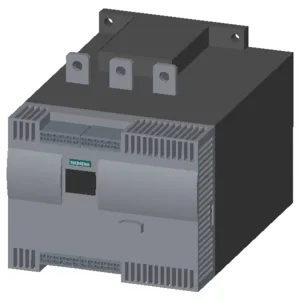
Depth is 298 mm, width 210 mm, height 230 mm. That depth is the critical dimension for retrofit into existing enclosures — measure the back panel clearance before committing. Mounting position is flexible: vertical surface with ±90° rotation and ±22.5° tilt front/back. Screw fixing, not DIN rail — plan for drilled and tapped holes or a mounting plate. Main power connections accept stranded 70–240 mm² or busbar connection. For North American wire, the main contacts take 2/0–500 kcmil. The busbar option is preferred for high-current runs to avoid multiple parallel cables.
Protection and diagnostics on board
Motor overload protection is integrated — the soft starter models motor thermal state directly, no separate overload relay needed. Adjustable current limitation lets you set the starting current profile between 8 % and the rated current. Intrinsic device protection covers the thyristors against overtemperature and overcurrent. A display shows fault signals locally — no HMI or panel door cutout required for basic diagnostics. Clearance and creepage distances are designed for that level.
Sourcing and lifecycle — active production, quoted per BOM
Sourced through authorized distribution channels. The 542 A rating and inside-delta topology make it a direct fit for motor control centers where a VFD is overkill but a direct-on-line contactor is too harsh.