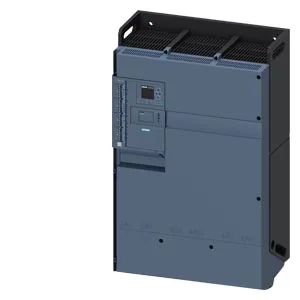
Panel fit and wiring reality
The 3RW5558-6HA14: This soft starter measures 478 mm wide by 764 mm tall by 241 mm deep — a substantial footprint that needs clear DIN-rail or backplate space and 100 mm clearance above, 75 mm below, and 10 mm in front for airflow and cable bending radius. Termination is via screw terminals, which means a screwdriver and torque wrench for the power and control wiring — no spring-cage here, so budget time for proper torquing per the installation manual.
Trip class and motor protection
The trip class is selectable from Class 10A, 10E (default), 20E, or 30E per IEC 60947-4-2 — this lets you match the thermal overload curve to the motor's starting duty: Class 10 for standard starts, Class 20 or 30 for high-inertia loads like fans or crushers that need a longer ramp. Rated voltage spans 200 to 480 V AC, covering common global low-voltage motor supplies without a tap change. Service factor is 1.15, so the starter can handle a 15% continuous overload above the motor's nameplate rating — useful for intermittent overloads in pumping or conveying.
Fieldbus and control integration
On the control side, this unit supports Modbus RTU, Modbus TCP, and EtherNet/IP — three common industrial Ethernet and serial protocols — plus PROFIBUS if the application needs it. The analog output is configurable as 4-20 mA or 0-10 V, giving the PLC or SCADA a real-time motor current or torque signal without a separate transducer. Built-in torque control, breakaway pulse, and pump ramp down mean this starter handles demanding loads like high-friction conveyors or water hammer prevention without external add-ons.
Compliance and approvals for global installs
ATEX and IECEx certification (both marked Yes) mean this unit is approved for use in potentially explosive atmospheres — essential for oil & gas, chemical, or grain handling where the motor circuit must not become an ignition source. UL and CSA approval cover North American installations, while CE marking satisfies European Union directives — so this single order code works across most regulatory jurisdictions without a variant change.