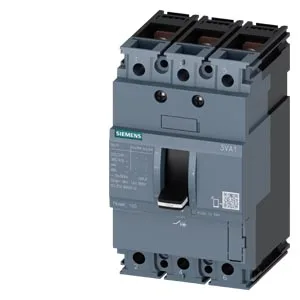
It carries a 52.5 kA interrupting capacity at 240 V and 32 kA at 415 V, which means it can safely clear a fault up to that level without the arc flashing over to adjacent gear — the kind of headroom that keeps a panel from becoming a postmortem project. You set it at 40 A and it stays there. That is fine for a dedicated feeder or a fixed-load branch where you do not need the flexibility of an electronic trip. That gives you a status signal for the PLC or a remote annunciator without bolting on an external block. The shunt trip (STL) lets an E-stop or a safety relay drop the breaker remotely — useful on a conveyor line where you want a hard disconnect from a pushbutton station. The interrupting ratings drop as the voltage climbs: 13.6 kA at 440 V and 7.5 kA at 690 V. If your panel feeds a 690 V motor drive, that 7.5 kA is your available fault-current ceiling — make sure your system study stays under it.
Thermal derating — what it means on a hot panel
At 55 °C it derates to 38.4 A, at 60 °C to 37.6 A, at 65 °C to 36.8 A, and at 70 °C to 36 A. If the MCC is packed tight and running hot, that derating is the real ampacity — not the nameplate 40 A. Size your load accordingly or leave an air gap between breakers.
It is a straight thermal-magnetic breaker with a shunt trip and auxiliary contacts — nothing more, nothing less.