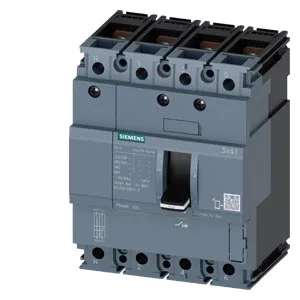
Breaking capacity climbs with system voltage: 52.5 kA at 240 V, 32 kA at 415 V, 13.6 kA at 440 V, and 7.5 kA at 690 V. At 415 V, that 32 kA covers most industrial distribution panels in common low-voltage networks — enough to clear a fault without upstream coordination headaches. The 690 V figure matters for 690 V line supplies (some mining, marine, or heavy industrial plants).
Thermal derating — what the current numbers mean
Above that, it derates: 76.8 A at 55 °C, 75.2 A at 60 °C, 73.6 A at 65 °C, and 72 A at 70 °C. The TM210 release does not need external adjustment; the thermal element self-compensates.
Panel fit and aux contacts
Dimensions: 101.6 mm wide, 130 mm high, 70 mm deep. That 101.6 mm width is a standard 4-pole MCCB footprint — it occupies four 25.4 mm (1-inch) module positions on a DIN rail or panel-mount base. The 70 mm depth keeps it clear of most gland plates and backpanel wiring troughs. The auxiliary switch follows the breaker position; the trip alarm signals only on a fault trip, not on manual switching. That is useful for remote indication — the alarm contact can trigger a PLC input or a panel light when the breaker clears a fault. No additional auxiliary release is fitted, but the HQ contact block is factory-integrated.