What it is and what it does
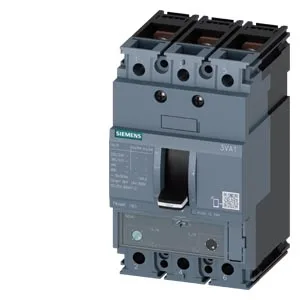
The Siemens 3VA1110-3EF32-0DH0 is a 3-pole SENTRON molded case circuit breaker (MCCB) rated 100 A at 40 °C, designed for line protection in distribution panels. It carries a 75.6 kA interrupting capacity at 240 V and 52.5 kA at 415 V, giving you the fault-clearing headroom for high-available-fault-current service entrances or downstream sub-feeders where selective coordination is a requirement. This breaker ships with an integrated undervoltage release (UVR) and is factory-fitted with two auxiliary switches plus one trip alarm switch (HQ configuration). The UVR drops the breaker on loss of control voltage — common in safety circuits or emergency-stop chains where a voltage-monitored disconnect is mandated. The auxiliary contacts feed status back to a PLC or annunciator panel without needing a separate interlock block.
Key ratings and what they mean for fit
The 100 A continuous rating at 40 °C holds flat up to 50 °C; above that it derates to 98 A at 55 °C and 91 A at 70 °C. If your panel ambient runs hot — say inside a non-conditioned enclosure near a furnace line — verify the thermal derate curve before committing the BOM line. The rated insulation voltage is 800 V, so the breaker is also suitable for 690 V systems with the appropriate interrupting rating (11.9 kA at 690 V). Interrupting ratings step down across the voltage table: 75.6 kA at 240 V, 52.5 kA at 415 V, 32 kA at 440 V, and 11.9 kA at 500 V and 690 V. For a 480 V panel application the 32 kA at 440 V figure is the closest published value — confirm your available fault current against that. The 3-pole footprint (76.2 mm wide, 130 mm tall, 70 mm deep) fits standard Siemens SENTRON mounting bases and busbar kits.
Panel integration and wiring
Mounts on a standard DIN rail or direct-panel base using the SENTRON mounting system. The 76.2 mm width (3 inches) matches the standard 3-pole MCCB slot in Siemens distribution boards. The undervoltage release coil draws power from the control circuit; ensure the upstream control transformer or power supply is sized for the inrush. Auxiliary switch wiring (two form-C contacts plus one trip-alarm contact) terminates on the breaker's integral terminal block — no add-on module required.
