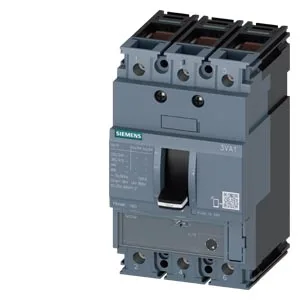
It uses a TM120M thermal-magnetic overcurrent release — no fancy electronics, just a bimetallic strip and magnetic coil that trip on overload and short-circuit. The breaking capacity at 240 V hits 220 kA, which is high enough to handle most industrial service-entrance or feeder applications without worrying about cascading upstream. Out here in the grease, where motors start and stop all day, the 100 A rating at 40 °C stays flat through 50 °C — only drops to 98 A at 55 °C and 91 A at 70 °C. That thermal derating curve means you can run this breaker near a hot motor starter enclosure without losing headroom.
This breaker's interrupting rating drops off as voltage climbs: 220 kA at 240 V, 154 kA at 415 V, 121 kA at 440 V, and 8.5 kA at 690 V.
That 70 mm depth means it fits standard panel-mount cutouts and leaves room for busbar connections behind the door. Two HP auxiliary switches are built in for status feedback to the PLC or alarm circuit.
Starter protection duty
This is the starter protection version, which means the TM120M release is tuned for motor starting profiles — it handles the inrush without nuisance tripping but still clears a locked-rotor fault. The 15 000 latching endurance cycles tell you it's built for frequent operation, not just a backup feeder breaker.