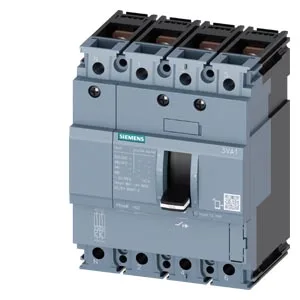
Breaking capacity is the headline here: 220 kA at 240 V AC, 154 kA at 415 V, 75.6 kA at 440 V, and still 17 kA at 500 V and 690 V. The 220 kA figure at 240 V means it's also suitable for North American 240/120 V split-phase or 240 V three-phase services where available fault current is high. For a line-protection MCCB, this is the workhorse configuration: simple, reliable, no programming needed. The 62 A rating is fixed, so verify your load current doesn't exceed that continuous figure.
The breaker is rated 125 A at 40 °C through 50 °C ambient, then derates gradually: 122 A at 55 °C, 120 A at 60 °C, 117 A at 65 °C, 114 A at 70 °C. Note the 62 A rating is the nominal frame rating — the thermal-magnetic release is calibrated for that value. The higher 125 A figures reflect the frame's thermal capacity, but the trip unit sets the actual continuous current limit. In a warm panel (55 °C+), you're still within the release's rating, but headroom shrinks. Dimensions are 130 mm height, 101.6 mm width, 70 mm depth — a compact 4-pole MCCB footprint. Front IP40 protection means it's splash-proof from the front but not sealed; mount it inside a panel, not exposed to washdown.
The 3VA series replaced the earlier 3VL series; this 3VA1112-6FD42-0AA0 is the current-generation MCCB. No direct second-source from other brands — MCCBs are form-factor and mounting specific. If you're replacing a 3VL or a competitor's 4-pole 63 A frame, verify the mounting hole pattern and busbar connection centers before committing.