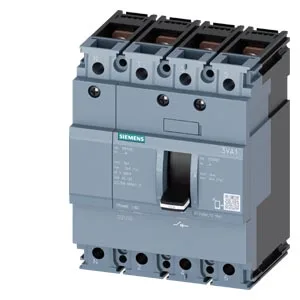
It functions purely as a disconnect — no overload or short-circuit protection built in, so it's for isolation and switching duty where the upstream protection is handled separately.
Rated insulation voltage Ui is 800 V, and the max operational voltage is 690 V AC 50/60 Hz or 600 V DC. That covers standard 400/480 VAC panels and many 600 VDC bus applications, but the DC rating is the limit to watch if you're switching a DC link. The short-time withstand is 2 kA at both 0.5 s and 1 s — this tells you the fault current the disconnect can handle momentarily while the upstream breaker clears. Mechanical endurance is 15,000 operations — that's the latching endurance, not the electrical life under load. For frequent switching applications, factor in derating for electrical wear at rated current. Power loss is 38 W maximum at rated current — relevant for thermal management inside a sealed enclosure.
The main circuit connection is busbar-style via front terminals, so it's designed for a busbar distribution system in a panel — not for ring-tongue or box-lug wiring direct to cable. Plan for busbar drops and a front-access gland plate layout. The IP rating is only on the front face; the busbar connections at the rear are typically exposed inside the enclosure. That's standard for indoor industrial gear, but if the panel sits near a furnace or in a refrigerated area, the 70 °C upper operating limit is the binding constraint.