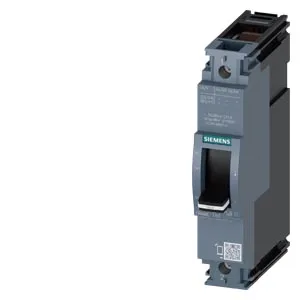
What this breaker carries and what it means for the panel
The TM240 trip unit gives you thermal-magnetic protection: overload adjustable from 14 A to 20 A (In=20 A) and a short-circuit magnetic pickup set at 8 to 16 times In. For a 20 A feeder, that means the magnetic trip fires between 160 A and 320 A — fast enough to clear a bolted fault before the upstream device sees it, but high enough to avoid nuisance trips from motor inrush on a lightly loaded line.
Auxiliary contacts and alarm switch — what they add
Two HQ auxiliary switches and one HQ trip alarm switch are factory-fitted. The aux switches signal the breaker's open/closed position to a PLC or status lamp; the trip alarm switch changes state only when the breaker trips on fault, not on manual opening — useful for remote fault annunciation without wiring separate shunt-trip monitoring.
Integration notes — DIN rail and wiring
Clamp terminals accept copper conductors — no lugs needed for the rated current range. Leave at least 25 mm clearance above and below for arc-vent space and tool access when terminating the UVR and aux-switch wires.