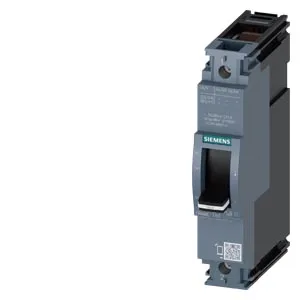
What this breaker carries and why it matters
The Siemens 3VA1140-4EF36-0CH0 is a 3-pole IEC frame 160 MCCB with a 36 kA breaking capacity at 415 V (class S), rated In=40 A. The TM240 thermal-magnetic trip unit gives adjustable overload protection from 28 to 40 A and short-circuit pickup at 5 to 10 times In — so you set the Ir to match your cable or load, not the breaker's maximum. The built-in undervoltage release (UVR) operates on 120–127 V AC 50/60 Hz; if that control voltage drops, the breaker trips instantly, which is standard for emergency-stop or mains-monitoring circuits. Two HQ auxiliary switches and one HQ trip alarm switch are factory-fitted, so you get remote status and fault indication without adding accessories.
For a panel with a 25 kA available fault current at the main distribution board, this breaker has headroom. The adjustable Ir (28–40 A) lets you fine-tune overload protection without swapping the trip unit; the Ii range (5–10 x In) means the magnetic trip can be set as low as 200 A or as high as 400 A, which matters for motor-starting inrush or high-impedance fault discrimination. The UVR coil draws power continuously when the breaker is closed; if your control voltage is 120 V AC, this is a direct fit — no external relay needed.
The UVR and auxiliary switches are wired via the breaker's internal terminal block; the trip alarm switch changes state when the breaker trips on fault, not on manual off, so a PLC can distinguish a trip from a normal shutdown.