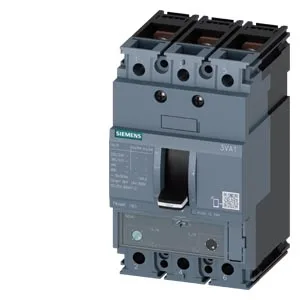
The interrupting capacity is the headline number here: 121 kA at 240 V, dropping to 75.6 kA at 415 V, 52.5 kA at 440 V, and 11.9 kA at 500 V and 690 V. Dimensions are 70 mm deep, 76.2 mm wide, 130 mm tall — a standard 3-pole MCCB footprint that fits SENTRON panel-mounting accessories and busbar systems. The 76.2 mm width (3 inches) is the pole spacing; three poles at 25.4 mm each. Max power loss is 17.1 W, which matters for thermal management in enclosed panels — derating starts at 55 °C (49 A) and drops to 45 A at 70 °C.
What the TM240 trip unit means for coordination
The thermal element is non-adjustable; the magnetic pickup is fixed as well. That's a simpler, more robust design than an electronic trip unit — no auxiliary power needed, no adjustment drift over time. But it also means no field-adjustable long-time or short-time pickup. For selectivity studies, the fixed curve is what you have; coordination with downstream breakers depends on the manufacturer's published time-current curves. The 121 kA interrupting at 240 V gives good headroom for high-fault installations, but at 480 V the 75.6 kA rating still covers most industrial services.
Mounts in a standard SENTRON distribution panel or enclosure using the manufacturer's mounting plate and busbar system. The 70 mm depth fits flush in most 200 mm deep enclosures. Line and load connections are via screw terminals — torque specs are on the nameplate. The undervoltage release terminals are separate; wire them to a control transformer or UPS if you need the breaker to stay closed on a sag.