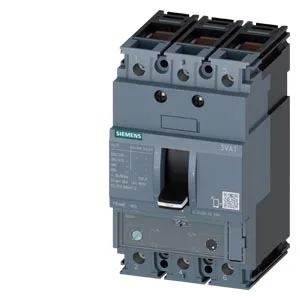
63 A MCCB with 121 kA interrupt at 240 V — the short-circuit rating that decides the panel
The headline number is the interrupting capacity: 121 kA at 240 V, 75.6 kA at 415 V, 52.5 kA at 440 V, and 11.9 kA at 690 V — that 121 kA figure means it clears a bolted fault at the service entrance without the arc flashing upstream, which is the spec that governs whether this breaker lands in the main distribution or a downstream subpanel.
Above that it steps down: 60.48 A at 55 °C, 59.22 A at 60 °C, 57.96 A at 65 °C, and 56.7 A at 70 °C. If the panel ambient hits 55 °C, the breaker is good for 60 A continuous — not 63. That derating curve is the difference between a breaker that holds and one that nuisance-trips on a hot summer afternoon. That 76.2 mm (3-inch) width is standard for a 3-pole MCCB in this class — it occupies three 25 mm DIN spaces.
Integration notes — aux contacts, shunt trip, and the IP40 front
The auxiliary contact block (2 aux + 1 alarm) is integrated from the factory — no separate add-on module to order and snap in. The shunt trip (STL) is also factory-fitted, so there is no field-install kit to track. That saves a BOM line and eliminates the risk of a missing accessory holding up a panel build. The 15 000 mechanical endurance cycles (latching) is typical for this class — adequate for a feeder breaker that cycles infrequently, not a daily-switched load.